

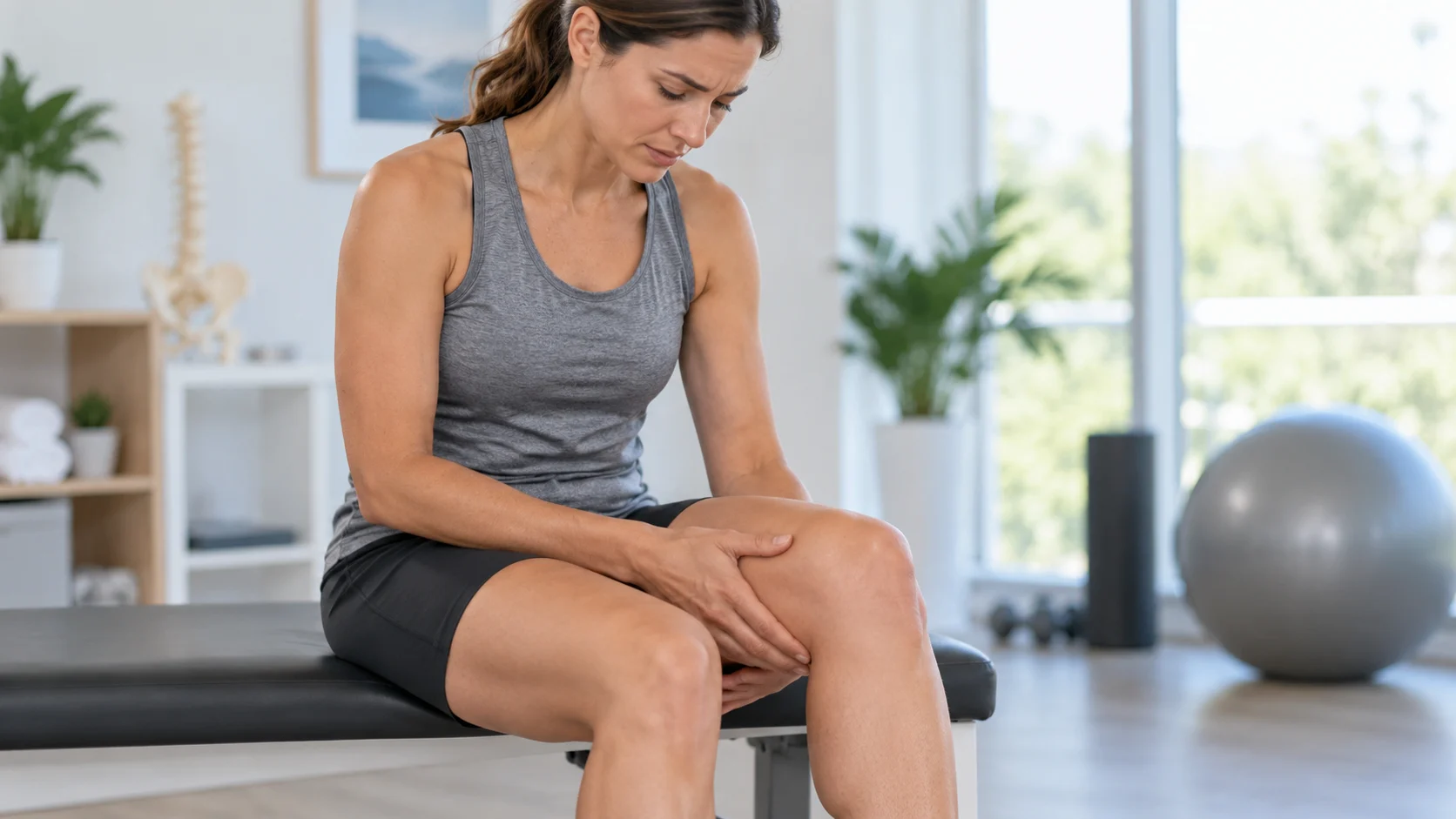
What Does Pain on the Inside of the Knee Mean?
The inner side of the knee is called the medial side. Pain there can come from several structures, including the medial meniscus, the medial collateral ligament (MCL), nearby tendons, or the joint itself. The location offers a clue, but it cannot identify the cause on its own.
Some people notice pain only when bending, walking, climbing stairs, or turning on a planted foot. Others feel stiffness or soreness even while resting. Swelling, bruising, clicking, or a sense that the knee may give way can help a clinician understand what is happening.
A minor strain or temporary irritation is one possibility, but inner knee pain can also have causes that need assessment. This article describes common explanations and sensible next steps. It cannot diagnose your symptoms; a clinician can consider your history and examine your knee to narrow down the cause.
Common Causes of Inner Knee Pain
A twist, sudden change of direction, direct impact, or increase in activity can strain knee tissues. Pain may also develop gradually after repeated running, kneeling, squatting, or walking. The timing and activity involved can help explain a flare, but the same activity can affect different structures in different people.
The medial meniscus is a crescent-shaped pad of cartilage between the thighbone and shinbone on the inner side of the knee. It helps distribute load and absorb force. A tear may happen during a twist, particularly when the foot is planted, and symptoms can include inner knee pain, swelling, or trouble moving the joint.
The MCL is a band of tissue along the inner knee that helps limit excessive side-to-side movement. It can be injured by a force that pushes the knee inward or by a twisting event. Inner knee pain may also relate to osteoarthritis or irritation of tendons and bursae near the joint. Musculoskeletal Matters
Medial Meniscus Tear
Meniscus problems may cause pain near the joint line, where the thighbone and shinbone meet. Symptoms can become more noticeable when you twist, squat, kneel, or bend the knee deeply. Some people report swelling, stiffness, clicking, or a catching sensation, although those signs do not prove that a tear is present.
A meniscus tear can occur during sport or everyday movement, such as turning while carrying something. Some tears are associated with a clear injury; others develop over time. A clinician will consider your symptoms, movement, and medical history before deciding whether further assessment or imaging is useful.
Not every meniscus tear needs surgery. Treatment depends on factors such as your symptoms, activity level, tear type, and examination findings. A healthcare professional may recommend a period of activity adjustment and rehabilitation, while more severe or persistent problems may need additional assessment. Do not assume that a click means you need an operation. nhs.uk
Medial Collateral Ligament (MCL) Injury
The MCL runs along the inside of the knee and helps provide stability. It may be strained when the knee is pushed inward, such as after a collision or awkward landing. Pain is often felt along the ligament, and swelling or tenderness can occur, particularly after a more significant injury.
The severity of an MCL injury varies. A mild strain may cause soreness but still allow walking, while a more serious injury can make the knee feel unstable or difficult to use. Other structures may also be injured during the same event, so a symptom pattern alone cannot confirm an MCL problem.
After a sudden injury, avoid testing the knee repeatedly by twisting or forcing it sideways. If you cannot bear weight, the knee feels unstable, or pain and swelling are substantial, seek medical advice promptly. A clinician can check stability and decide whether you need imaging, support, or a structured rehabilitation plan.
Osteoarthritis and Age-Related Changes
Osteoarthritis is a joint condition in which changes to cartilage and nearby tissues can contribute to pain and stiffness. It may affect one or both knees and can make everyday activities, such as walking or using stairs, more uncomfortable. Symptoms may fluctuate, and they do not always match what an X-ray shows.
Pain related to osteoarthritis can be felt around different parts of the knee, including the inner side. Stiffness after rest, reduced movement, or discomfort during weight-bearing activity may occur. These features are not unique to osteoarthritis, so a new or persistent problem should not be self-diagnosed based only on age or location.
Management often focuses on maintaining comfortable movement, building strength, and finding ways to manage activities that aggravate symptoms. A clinician or physiotherapist can help tailor an approach and discuss other options if needed. Do not stop all movement automatically; instead, adjust what triggers pain and ask for advice if symptoms limit daily life.
Pes Anserine Bursitis and Tendon Irritation
A small fluid-filled sac and several tendons sit below the inner knee, toward the upper shin. Irritation in this area is sometimes called pes anserine bursitis or pes anserine tendinopathy. Discomfort may be felt slightly below the joint line and can become more noticeable with stairs, exercise, or repeated knee bending.
The exact location can be difficult to judge without an examination, and pain below the inner knee may have other explanations. Repeated increases in walking, running, or training can irritate tissues, but pain can also arise without an obvious change in activity. Avoid using tenderness in one spot as proof of a specific diagnosis.
If this type of discomfort is suspected, a healthcare professional can distinguish it from problems inside the joint or other soft tissue injuries. In the meantime, consider temporarily reducing the activity that clearly aggravates your symptoms while keeping comfortable movement in your day. Seek advice if pain persists, worsens, or starts affecting walking.
How Symptoms Can Offer Clues
Pain after a twist, especially with swelling or trouble bending and straightening, may lead a clinician to consider a meniscus or ligament injury. Pain after a blow to the outside of the knee may raise concern about the MCL. These patterns are clues only; more than one structure can be affected at once.
A gradual onset after a change in activity may fit with overload or irritation, while stiffness and recurring discomfort can occur with joint conditions such as osteoarthritis. A hot, red, very swollen knee or sudden severe pain needs prompt attention, because some causes require timely medical care.
Notice when your pain occurs, what makes it better or worse, and whether the knee swells, locks, or gives way. Jotting down these details can help during an appointment. Avoid trying to diagnose yourself with online movement tests, as the results can be misleading and may aggravate an injury.
What You Can Do at Home Initially
For a mild problem without urgent warning signs, temporarily reduce activities that clearly worsen the pain. That might mean taking a break from running, deep squats, kneeling, or frequent stair climbing. Complete rest is not usually necessary for every sore knee; keep moving within a comfortable range if you can.
If swelling follows an injury, resting the leg in a supported position and applying a wrapped cold pack for short periods may help ease discomfort. Do not put ice directly on your skin. You can also avoid prolonged standing for a while and return to regular activity gradually as symptoms allow.
Pain medicines are not suitable for everyone, and some can interact with health conditions or other medicines. Ask a pharmacist or clinician what is safe for you, especially if you are pregnant, have a chronic condition, or take prescription medication. Get professional advice if home care is not helping or symptoms are getting worse. nhs.uk
Exercises and Activity During Recovery
When the knee is not acutely injured and movement is comfortable, gentle range-of-motion activity may help prevent stiffness. For example, while seated or lying down, you might slowly bend and straighten the knee within an easy range. Stop if this causes sharp pain, a catching sensation, or a clear worsening of symptoms.
Strengthening exercises can support the muscles around the knee, but the right choices depend on what is causing the pain. A physiotherapist may build a plan that gradually works on thigh and hip strength, balance, and return to activity. Starting with deep squats, jumping, or twisting drills can be unhelpful if they trigger your symptoms.
Use a gradual return to sport or exercise rather than jumping straight back to your previous workload. Increase one factor at a time, such as duration or intensity, and pay attention to how the knee responds later that day and the next morning. If pain repeatedly flares, seek individualized guidance instead of pushing through.
How a Clinician Evaluates Inner Knee Pain
A clinician will usually ask how the pain began, what activities affect it, and whether you have swelling, instability, locking, or difficulty bearing weight. They may ask about past knee injuries and your usual activity level. These details help determine which structures may need closer examination.
A physical examination may include observing how you stand and walk, checking knee movement and swelling, and gently assessing tenderness or stability. No single symptom or test provides a diagnosis in every case. Depending on your situation, a clinician may recommend monitoring, physiotherapy, an X-ray, or other imaging.
Scans are not needed for every episode of knee pain. Whether imaging is useful depends on the injury, examination, and how symptoms develop. If you are unsure where to seek help, start with a doctor or qualified physiotherapist who can assess your knee and explain the next step.
When to Seek Medical Attention
Arrange an assessment if pain is not improving, keeps returning, or makes it hard to walk, work, sleep, or take part in usual activities. You should also seek advice if your knee repeatedly locks or gives way, or if you have ongoing swelling. Persistent symptoms deserve attention even when they began without a clear injury.
Seek urgent medical help after a serious injury if you cannot put weight on the leg, cannot bend or straighten the knee, or the knee is badly swollen or has changed shape. A hot, red knee accompanied by fever or feeling unwell also needs urgent assessment because infection or another serious condition may be possible. nhs.uk
Get immediate help for new loss of feeling or tingling in the leg or foot, a visibly deformed knee, or rapidly worsening symptoms. If you have a medical condition that affects your immune system or take blood-thinning medication, mention it when seeking care. A professional can advise based on your symptoms and health history.
Conclusion
Pain on the inside of the knee can come from the medial meniscus, MCL, osteoarthritis, nearby tendons or bursae, or other causes. The place where it hurts and the activity that triggers it can offer useful clues, but they cannot confirm a diagnosis by themselves.
For mild symptoms, adjusting activities that aggravate the knee and keeping comfortable movement may be reasonable first steps. Return to exercise gradually, and avoid forcing movements that cause sharp pain or make symptoms worse. A clinician or physiotherapist can recommend appropriate exercises and next steps.
Seek prompt care if you cannot bear weight, the knee is hot and red, it has changed shape, or you feel unwell with fever. If the pain persists or interferes with daily activities, arrange an assessment to find out what may be causing it and how to manage it.
FAQs
What is the most common cause of pain on the inside of the knee?
There is no single cause for everyone. Inner knee pain can relate to a meniscus or MCL injury, osteoarthritis, or irritated tissues near the joint. An assessment can help narrow down the cause.
Can a meniscus tear cause pain on the inside of the knee?
Yes. A tear in the medial meniscus may cause pain along the inner joint line, sometimes with swelling, stiffness, or catching. These symptoms can also have other causes.
How can I tell if I injured my MCL?
An MCL injury can cause pain and tenderness along the inner knee, sometimes after a force pushes the knee inward. Instability or swelling may occur, but a clinician must assess the injury.
Should I walk with inner knee pain?
If walking is comfortable and does not worsen symptoms, gentle movement may be reasonable. Avoid forcing activity through sharp pain, and seek care if you cannot bear weight or symptoms are severe.
When should I see a doctor for inner knee pain?
Seek urgent care for a deformed or very swollen knee, inability to bear weight, a hot red knee with fever, or loss of feeling. Arrange an assessment for persistent or worsening pain.

