

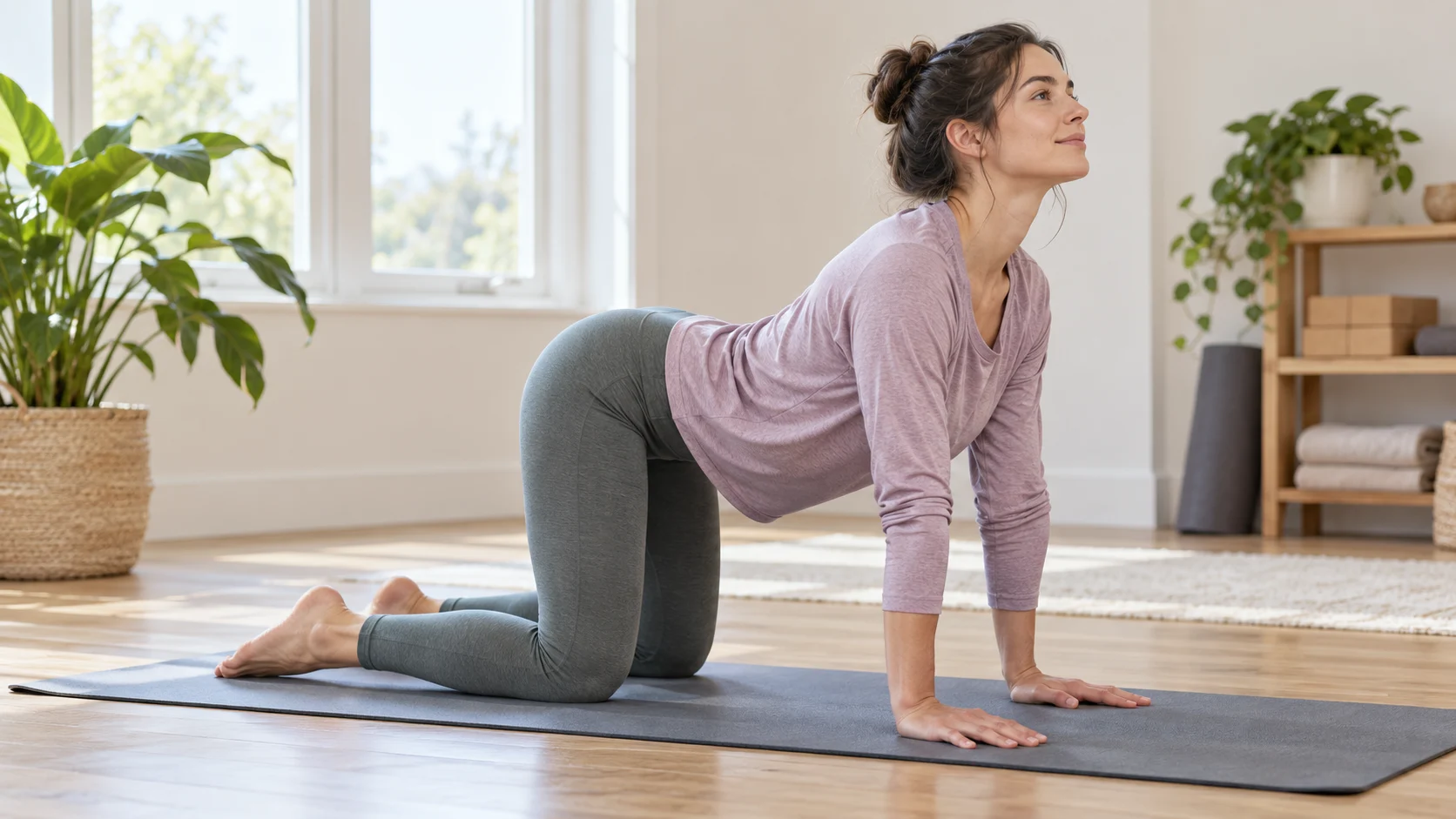
What Are Cat-Cows?
Cat-cow is a gentle movement exercise that alternates between rounding and extending the spine while you are on your hands and knees. It is also called cat-camel or cat-and-camel. The exercise moves the back through a comfortable range, rather than holding one deep stretch or requiring special equipment.
In the “cat” position, you gently round your back and let your head follow the curve. In the “cow” position, you ease your abdomen downward, lift your chest slightly, and allow a small arch through your back. The movement should feel smooth and controlled, not forced.
Cat-cow is often included in yoga warm-ups and mobility routines. A physiotherapist may also suggest a version as part of a movement plan. It can help you practise spinal movement, but it is not a cure for back pain or a replacement for individual advice when symptoms need assessment.
How Cat-Cow Moves the Spine
The exercise gently moves the spine between flexion and extension. Flexion is the rounded-back position; extension is the gently arched-back position. The movement involves more than the lower back: your pelvis, rib cage, shoulders, and neck adjust as you change positions.
The sequence also encourages coordination between breathing and movement. Many people exhale while rounding into cat and inhale while easing into cow. This is a helpful rhythm, but it does not need to be exact. The main aim is to stay relaxed, keep the movement comfortable, and avoid holding your breath.
Your spine does not need to reach a dramatic curve for the exercise to be useful. Small, controlled motion is enough to explore how your back feels in each direction. You can keep your gaze down or slightly forward so your neck follows the movement without being cranked up or tucked forcefully.
Potential Benefits of Cat-Cow
Cat-cow can help you practise moving your back through a gentle range of motion. Some people find that this feels comfortable after sitting still or as part of a warm-up. Its value is in giving you a simple way to move and notice how your spine and pelvis respond.
The movement may also support body awareness and coordination. As you alternate between rounding and arching, you can pay attention to where the movement happens and whether one direction feels more limited. That information may help you choose a smaller range or discuss symptoms with a physiotherapist.
People sometimes use cat-cow as part of a routine for back stiffness, but results vary. It does not identify the cause of discomfort or correct posture on its own. NHS physiotherapy guidance includes cat-camel among possible back mobility exercises, while advising people to adjust movements if symptoms increase.
Muscles and Areas Involved
Cat-cow is primarily a mobility exercise rather than a strength test. Muscles along the back and abdomen adjust as the trunk rounds and arches. Your shoulders and arms support your upper body, while your hips and legs help maintain a stable hands-and-knees position.
The exercise also moves the pelvis. In cat, the tailbone gently tucks under as the back rounds. In cow, the pelvis tips forward as the abdomen lowers. Try to let the movement travel through your back and pelvis without relying on an exaggerated neck movement or dropping your weight into your shoulders.
You may feel a mild stretch or movement through the back, abdomen, or shoulders. Sensations differ, and there is no requirement to feel a strong stretch in a particular muscle. If the exercise causes sharp pain, tingling, or discomfort that keeps increasing, stop and seek advice about a suitable alternative.
How to Do the Cat-Cow Stretch
Start on a mat or other comfortable surface on your hands and knees. Place your hands under your shoulders and knees under your hips, with fingers spread and your weight shared evenly. Keep your head in line with your spine, and let your neck relax before you begin.
For cat, breathe out and gently round your back toward the ceiling. Draw your abdomen in lightly, tuck your tailbone, and allow your head to follow by bringing your gaze toward the floor. Keep your shoulders relaxed and avoid pushing so hard through your hands that your upper back and neck tense.
For cow, breathe in and return through a comfortable neutral position before allowing a small arch. Let your abdomen soften toward the floor, lift your chest slightly, and tip your pelvis forward. Keep the movement easy and return to the middle before starting the next repetition. Do not force your head upward.
Breathing and Good Form
Keep your breath steady as you move. If it feels natural, exhale during cat and inhale during cow. A comfortable breath can help the sequence feel unhurried, but you do not need to match every part of the movement perfectly to a breath.
Think of lengthening your spine rather than pushing it to its limit. In cat, round gradually; in cow, use only a mild arch. The movement should be shared across your back and pelvis, not created by sharply lifting your chin or collapsing your lower back.
Keep your elbows soft without letting them buckle, and spread your fingers to distribute pressure through your hands. If your wrists are sensitive, change the hand position or choose a supported variation. Stop if you feel strain in your wrists, shoulders, neck, or back that does not ease when you make the movement smaller.
Repetitions and How Often to Practise
There is no single repetition count that suits everyone. If you are new to the movement, try five slow cycles and see how your back feels during and afterward. Each cycle includes one cat position and one cow position. You can stop sooner if your body feels uncomfortable or fatigued.
Move at a pace that lets you stay in control. Pausing briefly in each position can help you notice how it feels, but long holds are not necessary. If you find yourself rushing, holding your breath, or forcing the movement to meet a number, reduce the repetitions and return to an easy rhythm.
If the exercise remains comfortable, you can practise it as part of a regular mobility or warm-up routine. Follow a clinician’s instructions if you were given a specific plan, since their recommended frequency may reflect your symptoms or recovery. Gradually increase repetitions only if the movement feels manageable and does not worsen discomfort.
Modifications for Different Needs
If kneeling is uncomfortable, place a folded towel or cushion under your knees. You can also use a thicker mat to reduce pressure. Keep the motion smaller if your back feels sensitive, and move only through the range you can control without bracing or holding your breath.
If your wrists feel sore, try placing your hands on yoga blocks or a stable raised surface to reduce how far your wrists bend. Another option is to make loose fists and support yourself on your knuckles, if that feels comfortable. Avoid unstable objects, and stop if your hands or shoulders become painful.
You can also practise a seated version by sitting upright in a stable chair with your feet on the floor. Gently round your back as you exhale, then return to neutral and allow a small arch as you inhale. This changes the setup while keeping the main idea of alternating spinal movement.
Common Mistakes to Avoid
A common mistake is making the range too large. Trying to create a dramatic hump or deep arch can cause you to tense your back, neck, or shoulders. Cat-cow is a gentle mobility exercise; it should not feel like a test of flexibility or a competition to copy a picture.
Another mistake is moving only the head. Lifting your chin high in cow or forcing it down in cat can strain your neck while the rest of your spine barely moves. Let your head follow the movement comfortably, and keep your gaze near the floor or just ahead of your hands.
People may also shift too much weight into their hands, lock their elbows, or rush through repetitions. Spread your hands, keep the shoulders easy, and move slowly enough to stay steady. If you feel pain rising with each cycle, make the movement smaller or stop and ask a qualified professional for guidance.
Adding Cat-Cow to a Routine
You can use cat-cow as a short warm-up before gentle movement or as a brief mobility break after sitting. A few easy cycles may help you notice stiffness and get moving. You do not need to perform it at a particular time of day for it to count as movement.
For a broader routine, pair it with activities suited to your goals, such as walking or clinician-recommended strengthening exercises. Cat-cow alone does not build all-around strength or fitness. If you are managing back pain, a physiotherapist can help you decide whether to include it alongside other exercises.
Pay attention to how you feel later, not only while doing the stretch. If symptoms settle and your movement feels comfortable, you may continue at a modest pace. If your back feels worse afterward or the discomfort repeatedly returns, stop the exercise and discuss options with a healthcare professional.
Who Should Modify or Avoid Cat-Cow?
People with wrist, shoulder, knee, or back conditions may need to change the position or use a different exercise. Recent surgery, pregnancy-related discomfort, an injury, or a diagnosed spinal condition can also affect which movements are appropriate. When unsure, check with a clinician who understands your situation.
Do not use cat-cow to push through new, severe, or worsening symptoms. Stop if you notice sharp pain, numbness, tingling, weakness, dizziness, or pain spreading down an arm or leg. NHS guidance for back exercises recommends stopping if you feel pain or become unwell, and getting advice if exercise worsens symptoms.
Seek prompt medical assessment for back pain with new bladder or bowel control problems, numbness around the groin or saddle area, or significant weakness. These symptoms need urgent attention rather than a stretch routine. For persistent or unexplained pain, a healthcare professional can assess the cause and recommend safe movement.
Conclusion
Cat-cow is a simple hands-and-knees movement that alternates between gently rounding and arching the spine. It may help you practise spinal mobility and body awareness, and it can fit into a warm-up or movement routine. You do not need to make the range large to perform it well.
Use a steady breath, keep your neck relaxed, and adjust the setup if your knees or wrists feel uncomfortable. Start with a few slow cycles and pay attention to your body’s response. The movement should remain controlled and comfortable rather than becoming a forced stretch.
Cat-cow is not a diagnosis or a guaranteed treatment for back pain. Stop if symptoms worsen, and seek advice if you have persistent pain, an injury, or a health condition that may affect exercise. A physiotherapist or other qualified clinician can help tailor the movement to your needs.
FAQs
What is the cat-cow stretch good for?
Cat-cow gently moves the spine between rounded and arched positions. People use it to practise mobility and body awareness, often as part of a warm-up or a broader exercise routine.
How many cat-cow repetitions should I do?
Start with about five slow cycles and notice how you feel. There is no universal target; follow your clinician’s plan if you have one, and stop if symptoms worsen.
Should I arch my back as much as possible in cow pose?
No. Use a small, comfortable arch and keep your neck relaxed. Forcing a deep backbend can create unnecessary strain and is not required for the movement.
Can beginners do cat-cow every day?
Many beginners can include a few comfortable cycles in a routine, but daily practice is not essential for everyone. Adjust the movement or ask a clinician if you have pain or a health condition.
Should cat-cow hurt?
It should not cause sharp or increasing pain. Stop if it worsens your symptoms, causes tingling or numbness, or makes you feel unwell, and seek professional guidance.

