

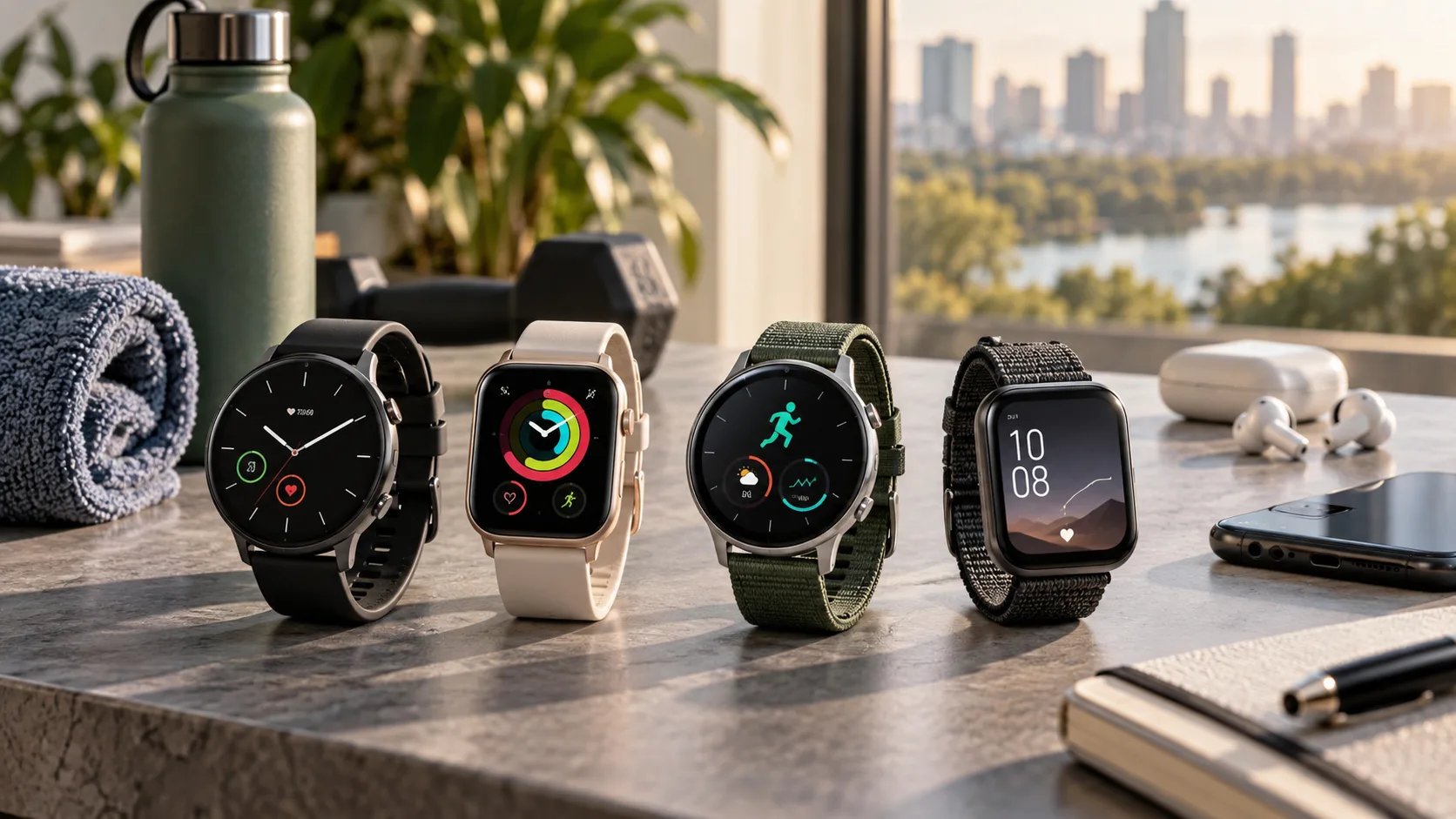
Smartwatches have become much more than simple devices for checking the time. Today, they can track workouts, monitor daily activity, display notifications, support navigation, manage calls, and provide useful wellness insights directly from your wrist. The best smartwatches for fitness and daily use combine practical health features with enough convenience to become useful throughout the entire day.
Choosing the right smartwatch can still be difficult because models vary widely in battery life, fitness tracking, operating systems, display quality, durability, and price. Some watches are built primarily for athletes, while others focus on communication, productivity, and lifestyle features. Understanding how you plan to use the device makes comparing different options considerably easier.
A good smartwatch should fit naturally into your routine rather than giving you more technology to manage. Whether you want to count steps, monitor workouts, check messages, follow GPS routes, or simply reduce how often you reach for your phone, the right wearable can make everyday activities more convenient. This guide explains the features that matter most.
Why Smartwatches Are Useful for Everyday Life
A smartwatch keeps important information accessible without requiring you to constantly unlock your phone. Incoming calls, text messages, calendar reminders, weather information, timers, and app notifications can appear directly on your wrist. This convenience is particularly useful while commuting, exercising, cooking, working, or participating in activities where handling a phone is inconvenient.
Many modern watches also support quick actions such as replying to messages, controlling music, setting alarms, checking navigation directions, or answering calls. Available functions depend on the model and connected smartphone, but even basic notification support can make a noticeable difference. You can quickly decide whether something requires immediate attention without becoming distracted by your phone.
The best smartwatches for fitness and daily use combine these practical features with health and activity tracking rather than focusing on one purpose alone. A balanced smartwatch should remain useful when you are working, exercising, relaxing, or traveling. That versatility is one of the main reasons wearable technology has become increasingly popular among everyday users.
Best Smartwatches for Fitness Tracking
Fitness-focused smartwatches can track activities such as walking, running, cycling, swimming, strength training, and indoor workouts. Most models monitor basic information including steps, distance, calories, workout duration, and heart rate. More advanced watches may also provide training zones, recovery information, elevation data, running metrics, and detailed workout summaries.
The right fitness watch depends heavily on your activity level. Casual users may only need automatic workout detection and basic activity goals, while serious runners or cyclists may want accurate GPS, advanced training metrics, and longer battery life. Selecting features that match your real workout habits prevents you from paying extra for athletic tools you rarely use.
Consistency matters just as much as advanced features. A comfortable watch that you enjoy wearing every day can provide more useful fitness information than a complicated device that frequently stays on your desk. Look for an easy-to-read display, comfortable strap, reliable sensors, and an interface that makes checking your activity progress simple.
Best Smartwatches for Daily Communication and Productivity
Smartwatches can reduce the number of times you need to check your smartphone throughout the day. Notifications for email, messaging applications, calendar appointments, and incoming calls can appear instantly on your wrist. Some watches also let you respond using predefined replies, voice input, small keyboards, or speech-to-text features depending on the operating system.
Calendar integration is particularly helpful for professionals and students managing busy schedules. Reminders can alert you before meetings, classes, deadlines, appointments, or personal tasks without requiring constant phone checking. Timers, alarms, voice assistants, and task applications can also turn a smartwatch into a lightweight productivity companion during work or study sessions.
A smartwatch is not designed to replace a larger productivity device, especially when tasks require reading, typing, or creating detailed content. For those activities, devices such as the best tablets provide a larger workspace. Smartwatches work best as convenient companions that surface important information quickly.
Health and Wellness Features Worth Considering
Modern smartwatches commonly include heart-rate tracking, sleep monitoring, activity reminders, and stress-related wellness features. These tools can help users observe patterns in their everyday routines and become more aware of movement, rest, and exercise habits. However, capabilities and accuracy vary significantly between manufacturers, sensors, algorithms, and individual users.
Sleep tracking can estimate how long you sleep and sometimes provide information about different sleep stages or overnight patterns. This feature is most useful when the watch is comfortable enough to wear throughout the night. Battery life also becomes important because frequent charging can make consistent overnight tracking more difficult.
Some premium models include additional sensors and wellness functions such as blood oxygen measurements, temperature-related insights, ECG capabilities, or irregular rhythm notifications. Availability may vary by country and device, and consumer wearables should not replace professional medical assessment. Treat these features as additional information rather than a diagnosis or substitute for healthcare.
Battery Life and Charging Performance
Battery life can greatly influence whether a smartwatch feels convenient or frustrating. Some feature-rich watches may require charging every day or two, while fitness-oriented and efficiency-focused models can operate for several days or even weeks. Your ideal battery life depends on how often you are comfortable removing the watch for charging.
Features such as always-on displays, continuous GPS, cellular connectivity, bright screens, and frequent workout tracking can reduce battery duration. Users who regularly record long runs, hikes, or cycling sessions should pay particular attention to GPS battery estimates. A watch that performs well during normal use may drain significantly faster during extended outdoor activities.
Fast charging can partially compensate for shorter battery life. If a watch can gain enough power during a shower, breakfast, or short break, daily charging becomes easier to manage. Before buying, consider when you realistically plan to charge the device, especially if you also want continuous sleep and overnight wellness tracking.
Smartphone Compatibility and Operating Systems
Compatibility should be checked before comparing advanced features because some smartwatches work best with specific smartphone ecosystems. Certain watches provide their full functionality only when paired with phones from the same platform or manufacturer. Using an incompatible device may limit messaging, application support, health features, payments, or synchronization.
Users who already rely heavily on one technology ecosystem often benefit from staying within it. Seamless synchronization can make notifications, contacts, calendars, music, applications, and fitness information easier to manage. Setup may also be simpler when your phone, watch, wireless earbuds, and other devices are designed to work together.
Cross-platform fitness watches can be appealing for users who want more flexibility. They may focus less on smartphone-style applications while offering strong workout tracking, battery life, and compatibility with multiple phone platforms. Check supported features carefully because the same smartwatch may behave differently depending on whether it is connected to Android or iOS.
Display, Comfort, and Smartwatch Design
A smartwatch is something you may wear for most of the day, so comfort should be a major consideration. Case size, weight, strap material, and overall thickness can influence how the device feels during work, workouts, and sleep. A larger watch may offer better readability but can feel bulky on smaller wrists.
Display quality affects both appearance and usability. Bright screens are easier to read outdoors, while sharp resolution helps text, maps, and fitness statistics remain clear. An always-on display can make checking the time more natural, although keeping the screen constantly active may consume additional battery depending on the technology used.
Design also matters because a smartwatch often functions as part of your everyday clothing. Some people prefer sporty designs with rugged cases, while others want a minimal watch suitable for professional environments. Interchangeable straps can provide flexibility, allowing one device to look appropriate during workouts, work meetings, casual outings, and formal events.
GPS, Sports Modes, and Outdoor Features
Built-in GPS is valuable for runners, cyclists, hikers, and walkers who want to track routes without relying completely on their phones. GPS-enabled watches can record distance, pace, speed, and location during outdoor workouts. Accuracy can vary between devices, especially around tall buildings, dense trees, or challenging terrain.
Sports modes allow the watch to collect information suited to different activities. Running may emphasize pace and distance, while strength training may focus on workout duration and heart rate. Swimming modes can track laps or distance on compatible water-resistant devices, while hiking features may include elevation, navigation, or route information.
Outdoor enthusiasts may also want stronger durability, water resistance, physical buttons, compass functions, and longer battery life. Touchscreens can become harder to operate with wet hands or gloves, making button controls useful in challenging environments. The best smartwatches for fitness and daily use should match the conditions in which you actually plan to exercise.
Budget vs Premium Smartwatches
Budget smartwatches can provide excellent basic functionality for users who mainly want step counting, heart-rate monitoring, simple workouts, notifications, and sleep tracking. Affordable models often sacrifice premium materials, advanced sensors, third-party applications, or highly detailed fitness analytics. For casual users, those compromises may have little effect on everyday usefulness.
Mid-range watches usually offer the strongest balance between features and price. They may provide better displays, improved GPS, more reliable fitness tracking, longer software support, and stronger build quality than entry-level devices. This category is worth considering if you want a smartwatch that can comfortably support both exercise and daily communication.
Premium watches typically add advanced materials, cellular options, sophisticated fitness data, stronger processors, specialized sensors, or deeper ecosystem integration. These features can be valuable for demanding users, but they are not essential for everyone. Paying more makes sense when the additional capabilities directly improve activities you regularly perform rather than simply increasing the specification list.
How to Choose the Right Smartwatch
Begin by deciding what you want your smartwatch to do most often. If fitness is your main priority, focus on GPS accuracy, workout modes, sensors, comfort, and battery life. If communication is more important, prioritize notifications, calls, messaging, application support, and compatibility with your smartphone.
Next, consider how often you are willing to charge the device. A powerful smartwatch with extensive applications may offer shorter battery life, while fitness-focused models can often last considerably longer. Think about whether you want overnight sleep tracking because this may limit convenient charging opportunities during your normal routine.
Finally, compare total value rather than choosing based entirely on brand or price. Consider software support, replacement straps, durability, smartphone compatibility, health features, display quality, and the applications you genuinely need. The best smartwatches for fitness and daily use are those that fit comfortably into your lifestyle without making you pay for unnecessary capabilities.
Conclusion
Smartwatches can be valuable everyday companions for people who want easier access to notifications, activity data, workout tracking, navigation, and basic productivity tools. Fitness users should focus on reliable sensors, GPS, comfort, and battery life, while general users may care more about communication features, display quality, and smartphone integration.
You do not necessarily need the most expensive smartwatch to get a useful experience. Many affordable and mid-range devices provide dependable step tracking, heart-rate monitoring, workout modes, notifications, sleep insights, and long battery life. Selecting a balanced model based on your own priorities usually delivers better value than simply choosing the device with the longest feature list.
The best smartwatches for fitness and daily use should make everyday routines easier rather than more complicated. Check compatibility, battery life, comfort, fitness capabilities, software support, and overall design before purchasing. A carefully selected smartwatch can support exercise, organization, communication, and daily convenience from morning until night.
FAQs
What features should I look for in a fitness smartwatch?
Look for reliable heart-rate tracking, GPS, useful workout modes, comfortable straps, water resistance, and sufficient battery life. Choose advanced training features only if they match your regular exercise routine.
Can I use a smartwatch without carrying my phone?
Some functions work independently, including basic fitness tracking and downloaded music. Watches with cellular connectivity can offer greater independence, although available calling, messaging, and internet features depend on the model and mobile plan.
How long should a smartwatch battery last?
Battery life ranges from roughly a day on some feature-heavy devices to several days or weeks on efficiency-focused watches. Your usage of GPS, cellular service, and always-on displays significantly affects battery duration.
Are budget smartwatches good for fitness tracking?
Budget smartwatches can work well for steps, basic workouts, heart rate, and general activity trends. Serious athletes may prefer higher-end devices offering more accurate GPS, detailed metrics, and specialized training tools.
Is a smartwatch worth buying for everyday use?
Yes, if you value quick notifications, fitness tracking, timers, calls, navigation, or wellness insights. The greatest benefit comes from choosing a device whose features genuinely match your daily habits.

