

What Causes Most PII Data Breaches? Explained
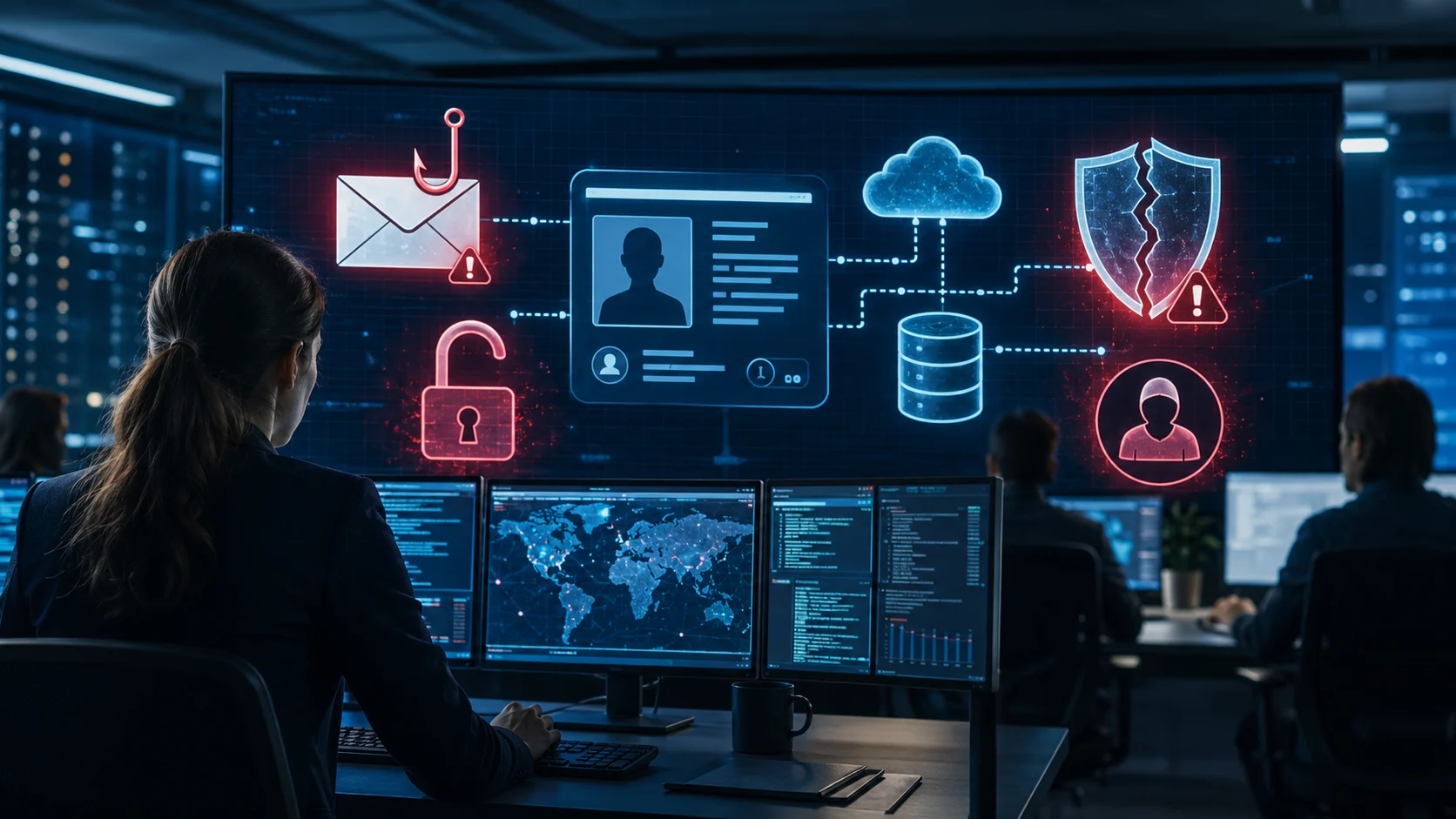
Personally identifiable information, commonly called PII, is among the most valuable data organizations collect, which also makes it a frequent target for cybercriminals. PII can include names, addresses, phone numbers, email addresses, government identification numbers, financial details, account credentials, and other information that can identify or be linked to an individual. Most PII data breaches are not caused by one single technical failure. They usually result from a combination of stolen credentials, phishing, human error, weak access controls, misconfigured systems, software vulnerabilities, or third-party security problems. Attackers often choose the easiest path rather than attempting an extremely sophisticated technical attack. Understanding those paths is the first step toward protecting sensitive information effectively.
The exact leading cause can vary by industry, organization size, and how incidents are categorized, but compromised credentials and human-related security failures repeatedly appear among the biggest risks. An employee may enter a password into a phishing page, an administrator may expose a cloud database accidentally, or an attacker may exploit an unpatched internet-facing system. Third-party providers can also expose PII even when the organization collecting the information is not directly compromised. Once attackers gain access, they may steal customer records, employee information, payment details, or identity data before anyone notices. This guide explains what causes most PII data breaches, how the major attack paths work, and what organizations can do to reduce the likelihood and impact of sensitive-data exposure.
What Is a PII Data Breach?
A PII data breach occurs when personally identifiable information is accessed, exposed, disclosed, altered, stolen, or otherwise handled by an unauthorized person or system. The breach can involve customer information, employee records, patient information, account data, or any other personal details an organization stores. A cybercriminal does not always need to download an entire database for an incident to qualify as a serious exposure. Unauthorized viewing, accidental public access, or sending personal information to the wrong recipient can also create risk. The impact depends on what information was involved and how easily it could be misused. Highly sensitive identifiers can create greater consequences than information already available publicly.
PII can be direct or indirect depending on whether a piece of information identifies someone by itself or becomes identifying when combined with other data. A government identification number may identify one person directly, while an IP address, location history, device identifier, or demographic detail may become identifying when connected with additional information. Organizations therefore need to understand the complete data context rather than protecting only obvious fields such as names and addresses. Attackers frequently combine information from multiple sources when committing fraud or social engineering. Data that looks harmless in isolation may become valuable when linked with account information or behavioral records. Effective PII protection starts with knowing what information the organization actually collects.
A breach may result from a deliberate cyberattack, but it can also happen through accidental actions. An employee could attach the wrong spreadsheet to an email, upload a database backup to an unsecured location, or grant public access to a cloud storage bucket containing customer information. Lost laptops, stolen devices, printed documents, and discarded storage media can also expose PII when appropriate protections are missing. These incidents demonstrate that cybersecurity is only part of the data protection problem. Organizations also need clear handling procedures, access controls, secure disposal practices, and employee training. Preventing PII exposure requires attention to both malicious threats and ordinary operational mistakes.
The consequences of a PII breach can extend far beyond the initial technical incident. Individuals may face identity theft, account takeover, phishing, financial fraud, harassment, or unwanted exposure of private information. Businesses can experience investigation costs, legal expenses, operational disruption, customer complaints, reputational damage, and regulatory consequences. Security teams may also need to reset credentials, monitor compromised accounts, investigate logs, restore systems, and notify affected people. The cost therefore depends on both the type of information involved and how broadly the incident affects operations. Protecting PII is not simply a compliance exercise; it is part of maintaining customer trust and business resilience.
One reason PII remains attractive to attackers is that personal information can continue to have value long after a breach occurs. Passwords can be changed, but dates of birth, government identifiers, and historical records may remain the same for years. Criminals can combine stolen personal information with credentials, financial data, or publicly available information to create convincing scams. PII can also help attackers impersonate employees or customers when contacting support teams. The value of the information makes databases containing personal records particularly attractive targets. Organizations should therefore treat large collections of PII as high-value assets requiring stronger controls than ordinary business information.
What Causes Most PII Data Breaches?
Compromised credentials are among the most common pathways into systems containing PII. Attackers obtain usernames and passwords through phishing, malware, reused credentials, credential stuffing, social engineering, or information exposed in previous breaches. Once a valid account is compromised, the attacker may appear similar to an ordinary authorized user. This makes credential-based attacks difficult to detect when organizations rely only on passwords for authentication. If the stolen account has access to customer databases, cloud storage, or administrative systems, the attacker may quickly reach sensitive information. Strong authentication and careful permission design are therefore critical to reducing PII exposure.
Human error is another major cause because employees and administrators interact with sensitive information constantly. A worker might share the wrong file, send an email to an unintended recipient, or store information in an unapproved application. Administrators can make mistakes when configuring cloud storage, databases, web servers, or identity permissions. Developers may accidentally place sensitive information inside logs, code repositories, or test environments. These errors are often unintentional, but the consequences can still be significant. Organizations need processes that make secure behavior easier rather than depending entirely on every employee remembering every security rule.
Phishing remains a powerful attack method because it targets people rather than trying to defeat every technical control directly. Attackers create emails, text messages, websites, or login prompts designed to imitate trusted organizations and services. A victim may believe a message came from a colleague, bank, software provider, or administrator and enter login credentials into a fake page. Those credentials can then be used to access legitimate business systems. Modern phishing can become more convincing when attackers use information gathered from social media or previous data leaks. Technical filtering helps, but authentication controls and employee awareness remain essential layers of protection.
Misconfiguration can expose enormous quantities of PII without an attacker needing to exploit a software bug. A cloud database may be reachable from the internet when it should be restricted to internal systems. Storage permissions can accidentally allow anonymous users to read files, while network security rules may expose administrative interfaces publicly. Backup copies and development environments are especially easy to overlook because they may not receive the same security attention as production systems. Automated infrastructure can reduce some mistakes, but incorrect templates can also reproduce a problem across many resources. Continuous configuration monitoring helps organizations identify exposure before attackers discover it.
Third-party access and software vulnerabilities complete much of the modern PII breach picture. Organizations increasingly depend on payroll platforms, cloud services, analytics providers, marketing systems, customer support tools, payment processors, and other vendors that may process personal information. A compromise affecting one supplier can therefore expose information belonging to many customers or partner organizations. Attackers may also exploit unpatched vulnerabilities in web applications, VPN appliances, servers, or other internet-facing systems to gain an initial foothold. These causes often overlap with stolen credentials and weak permissions after the attacker gets inside. Most serious breaches therefore develop through a chain of weaknesses rather than one isolated failure.
Phishing and Stolen Credentials
Phishing attacks are designed to convince people to reveal information or perform an action that benefits the attacker. A typical phishing email may claim that an account is locked and direct the recipient toward a fake login page. The page can look nearly identical to a legitimate Microsoft, Google, banking, or corporate authentication screen. When the victim enters credentials, the attacker captures them immediately and may attempt to use them before the employee realizes anything is wrong. Some campaigns also attempt to steal multifactor authentication codes. This is why phishing protection requires more than simply teaching users to look for spelling mistakes.
Credential reuse makes phishing and previous breaches even more dangerous. Many people use the same password across several services because remembering unique credentials can be difficult. If one unrelated website is breached, attackers may test the exposed email and password combination against business accounts. This automated technique is commonly called credential stuffing. The attacker does not need to guess the password because a user has already reused it somewhere else. Password managers and unique credentials reduce this risk considerably. Organizations can also monitor for suspicious authentication attempts and enforce multifactor authentication for important systems.
Stolen credentials are particularly dangerous when accounts have excessive privileges. A compromised marketing employee should not automatically provide access to payroll files, customer databases, and cloud administration tools unless that access is necessary for the employee’s responsibilities. Attackers often search for ways to move from one account toward systems containing more valuable data. They may look for saved credentials, shared folders, internal applications, or improperly protected administrative interfaces. Limiting permissions reduces how far one compromised account can reach. This principle is commonly described as least privilege and remains one of the most important controls for reducing breach impact.
Multifactor authentication can significantly reduce the value of stolen passwords because the attacker needs another authentication factor before gaining access. However, not all MFA methods provide the same level of resistance to phishing. Attackers can sometimes trick users into approving unexpected push notifications or entering temporary codes into malicious websites. Phishing-resistant authentication methods can provide stronger protection for high-risk accounts. Organizations should also alert users when unusual sign-in behavior occurs. Authentication systems should evaluate location, device, timing, and other signals rather than relying only on whether the username and password were correct.
Credential protection should continue after login because attackers may steal active sessions rather than passwords themselves. Malware, malicious browser extensions, or compromised devices can capture session tokens that allow an attacker to impersonate an authenticated user temporarily. Session expiration, device security, endpoint monitoring, and reauthentication for sensitive actions can reduce this risk. Administrators should also have the ability to revoke active sessions quickly when suspicious activity is discovered. Strong identity security is therefore a complete lifecycle rather than one login screen. Preventing PII breaches requires protecting credentials, authentication factors, sessions, devices, and the permissions associated with each identity.
Human Error and Misconfigured Systems
Human error can expose PII even in organizations with strong cybersecurity technology. Employees routinely handle spreadsheets, reports, customer records, support tickets, and internal documents that may contain personal information. A simple autocomplete mistake can send sensitive data to the wrong email recipient. Files may also be shared through links configured for public access instead of restricted access. These incidents can occur without malicious intent and may not trigger the same alerts as malware. Data-loss prevention controls, clear labeling, and safer default sharing settings can reduce the likelihood that one ordinary mistake becomes a serious breach.
Cloud misconfiguration has become particularly important because infrastructure can be created quickly through web consoles and automated deployment tools. A storage bucket containing customer records may accidentally allow access from the public internet. A database could accept connections from any IP address instead of a limited trusted network. Security groups may expose remote administration services more broadly than intended. These problems are often caused by configuration choices rather than flaws in the cloud provider itself. Organizations need continuous visibility into cloud permissions because environments change too frequently for one-time security reviews to remain reliable.
Development and testing systems can create another source of exposure. Teams sometimes copy real production data into nonproduction environments because realistic information makes testing easier. Those systems may have weaker access controls, less monitoring, or more temporary users than the production environment. If they contain genuine customer PII, attackers can target them instead of attempting to compromise the better-protected production database. Organizations can reduce this risk through data masking, synthetic test data, and stronger environment separation. Developers should receive only the personal information required for legitimate testing purposes. Production data should not become the default solution for every testing need.
Sensitive information can also leak through logs, error messages, analytics systems, and monitoring platforms. A developer might record full customer records when debugging an application, not realizing that the log platform retains that data for months. URLs can contain personal values that later appear in browser histories, proxy logs, or analytics tools. Support screenshots may include account information that becomes attached to tickets accessible by broad teams. These secondary copies are easy to overlook because they are not recognized as formal databases. Data discovery tools can help identify where PII appears unexpectedly across an organization’s environment.
Reducing human error requires designing systems that assume people will occasionally make mistakes. Training remains useful, but warnings and annual awareness courses cannot replace technical controls. Sensitive exports can require additional approval, public sharing can be disabled by default, and cloud configurations can be checked automatically against security policies. Applications can mask personal information when full values are unnecessary. Access to high-risk administrative actions can require stronger authentication or peer review. Effective security therefore combines education with guardrails that make dangerous mistakes harder to perform and easier to detect.
Third-Party Vendors and Supply Chain Risk
Modern businesses share PII with a wide range of external service providers. Payroll companies handle employee information, customer relationship platforms store contact records, marketing tools process behavioral data, and support platforms contain customer conversations. Cloud hosting companies may store large databases even when they do not actively use the information. Each additional provider becomes part of the organization’s broader data security environment. A business can maintain excellent internal security and still experience a breach through a supplier with weaker controls. Vendor risk management is therefore an important part of protecting personal information.
Third-party breaches can have a large impact because one vendor may serve hundreds or thousands of organizations. Attackers understand this concentration of access and may deliberately target software providers, managed service companies, or widely used business platforms. Compromising one supplier can provide access to many downstream customers. The risk becomes even greater when vendors maintain privileged technical access into customer environments. Organizations should therefore understand not only which vendors store PII but also which suppliers can connect directly to internal systems. Privileged vendor access should be limited, monitored, and removed when no longer required.
Software supply chain attacks create a related risk when attackers compromise code, updates, dependencies, or development infrastructure. Organizations routinely install trusted updates without manually reviewing every line of code because doing so would be impractical. If a trusted distribution channel is compromised, malicious functionality can reach customers through apparently legitimate software. Open-source dependencies can also introduce vulnerabilities when applications rely on outdated or abandoned components. Security teams therefore need visibility into software dependencies and update practices. Trusted suppliers still require verification, monitoring, and incident response planning.
Vendor contracts and questionnaires can support security oversight, but they should not become paperwork exercises disconnected from real risk. Organizations need to understand what data the provider receives, how long it is retained, where it is stored, and which subcontractors may access it. They should also clarify how quickly the vendor must report a suspected breach. Sensitive information should be minimized before being shared whenever possible. If a provider needs only an email address to perform a service, sending full identity records creates unnecessary exposure. Data minimization reduces the amount of information that can be lost when a supplier experiences an incident.
Third-party risk continues after a contract ends. Vendors may retain archived copies, backups, exported reports, or old user accounts long after the business relationship changes. Organizations should include secure deletion and account termination within offboarding procedures. API keys, service accounts, and remote access credentials associated with former suppliers should be revoked promptly. Periodic reviews can identify vendors that no longer have a legitimate reason to receive personal information. Strong vendor security is therefore a lifecycle process covering selection, onboarding, monitoring, incident response, and termination rather than a one-time assessment before a contract is signed.
Malware, Ransomware, and Unpatched Vulnerabilities
Malware can contribute to PII breaches by stealing credentials, capturing data, monitoring user activity, or giving attackers persistent access to business systems. Some malicious software records keystrokes, while other variants search browsers, email clients, or local files for useful information. Attackers may use malware only as the first stage of a larger intrusion before moving toward databases and file servers. Endpoint detection systems can identify many suspicious behaviors, but attackers continually change techniques to avoid detection. Keeping devices patched and limiting administrative privileges reduces the opportunities malware can exploit after reaching an endpoint.
Ransomware incidents increasingly involve data theft in addition to encryption. Attackers may spend days or weeks exploring a network and copying sensitive information before triggering the visible encryption stage. PII can then be used as leverage in extortion attempts even when the organization restores systems successfully from backups. This means ransomware defense cannot focus only on backup and recovery. Organizations also need to detect unusual access, large data transfers, privilege escalation, and suspicious administrative activity before the encryption stage begins. Good backups protect availability, while access control and monitoring protect confidentiality.
Unpatched vulnerabilities provide another common entry point, particularly when vulnerable software is reachable directly from the internet. VPN appliances, firewalls, web applications, remote access services, and public-facing servers can become high-value targets when serious vulnerabilities are disclosed. Attackers frequently scan the internet looking for organizations that have not applied available security fixes. Delays can occur because businesses worry that patches may disrupt critical applications. Risk-based patch management helps teams prioritize vulnerabilities based on exploitability, exposure, and the sensitivity of affected systems rather than treating every update as equally urgent.
Legacy systems create additional difficulty because some applications can no longer receive security updates. Organizations may continue using old software because it supports a critical process or specialized equipment that is expensive to replace. If those systems store or provide access to PII, unsupported software can become a long-term security weakness. Network segmentation, strict access controls, application isolation, and additional monitoring can reduce exposure temporarily. However, compensating controls are not a permanent substitute for modernization. Businesses should maintain replacement plans for systems that cannot meet current security requirements.
Vulnerability management also needs to cover applications developed internally. A business may keep operating systems fully patched while its own web application contains an authorization flaw that exposes customer records. Secure development practices can identify problems through code review, automated testing, dependency scanning, and security assessments. Developers should avoid placing sensitive information in client-side code or trusting users to enforce permissions themselves. Security testing needs to continue after deployment because applications change frequently. Protecting PII requires attention to both commercially supplied software and code created within the organization.
Weak Access Controls and Excessive Data Collection
Weak access control can turn a small security incident into a major PII breach. If every employee can browse large customer databases, one compromised account may expose far more information than necessary. Access should be based on job responsibilities and limited to the minimum information required. Customer support employees may need to see account details but not complete payroll records or internal employee information. Finance teams may require payment data but not every piece of behavioral analytics. Separating access reduces the blast radius when an account is compromised or misused.
Privileged accounts require especially strong protection because administrators can often change security settings, create new users, or access large volumes of information. Organizations should maintain separate administrative accounts rather than allowing routine browsing and email from highly privileged identities. Privileged actions should be logged and monitored for unusual behavior. Temporary elevation can provide administrative permissions only when a specific task requires them. Shared administrator passwords should be avoided because they make accountability difficult. Strong privileged access management reduces both external compromise risk and the potential impact of insider misuse.
Excessive data collection creates risk even when access controls are strong. An organization cannot lose information that it never collected or that it has securely deleted. Businesses sometimes keep personal information because storage is inexpensive and the data might become useful later. However, every retained record increases the amount of information attackers can potentially steal. Data minimization asks whether each field is genuinely necessary for a defined business purpose. Reducing unnecessary collection can lower privacy risk without requiring another security product.
Retention policies should also determine how long PII remains stored. Customer applications, old support tickets, identity documents, and historical exports may remain accessible long after their original purpose has ended. Attackers frequently benefit from this accumulation because one breach can expose many years of personal information. Organizations should establish deletion schedules based on legal requirements, operational needs, and legitimate business purposes. Backup retention should also be considered because deleting information from a production database may not immediately remove every copy. Effective retention management reduces the long-term size of the sensitive-data footprint.
Data discovery is necessary before access and retention rules can work properly. Many organizations know where their primary customer database exists but have limited visibility into spreadsheets, shared drives, SaaS applications, cloud storage, and developer environments. Personal information can spread through exports and integrations faster than security teams realize. Classification tools and periodic inventories can identify systems containing PII and determine who can access them. Once the data is mapped, organizations can apply encryption, retention, monitoring, and permission controls more consistently. You cannot protect sensitive information effectively if you do not know where it resides.
How Organizations Can Prevent PII Data Breaches
Strong identity security should be one of the first priorities because stolen credentials are involved in many successful intrusions. Multifactor authentication should protect important business systems, especially email, cloud administration, remote access, and applications containing sensitive information. Password reuse should be discouraged through password managers and appropriate authentication policies. Organizations should monitor unusual sign-ins and revoke suspicious sessions quickly. Privileged accounts need additional protections because their compromise can expose large parts of the environment. Identity should be treated as a security boundary rather than simply a login mechanism.
Organizations should also reduce the amount of PII they collect and retain. Every stored field should have a clear business purpose, and information should be deleted when that purpose no longer exists and retention requirements allow removal. Sensitive values can be masked when users do not need to see the full information. Encryption helps protect data at rest and in transit when properly implemented and managed. Tokenization can replace certain sensitive values with substitutes in appropriate applications. These controls make stolen or accidentally exposed information less useful to unauthorized parties.
Employee training remains important because phishing and accidental disclosure cannot be eliminated entirely through technology. Training should be practical and relevant to the tasks employees actually perform. Finance teams may need to recognize fraudulent payment requests, while support employees should understand identity verification and safe handling of customer records. Developers need secure coding education, and administrators need guidance on cloud permissions and infrastructure security. Organizations should create simple reporting channels so employees can flag suspicious messages or accidental exposures quickly. Fast reporting can significantly reduce the impact of an incident.
Technical controls should continuously look for unsafe configurations and vulnerable systems. Automated scanning can identify exposed databases, public cloud storage, outdated software, weak encryption settings, and unnecessary internet-facing services. Security teams should prioritize remediation according to actual risk rather than producing long lists of findings without context. Critical systems containing PII deserve more urgent attention than isolated low-impact devices. Logging and monitoring should also focus on unusual data access, downloads, and privilege changes. Prevention and detection work best together because no organization can guarantee that every attack will be stopped.
Finally, businesses should prepare for the possibility that a breach may still occur despite reasonable controls. Incident response plans should identify who investigates suspected exposure, who makes legal and communication decisions, and how compromised access can be contained. Security teams need reliable logs and asset information to determine what data may have been affected. Backups and recovery procedures should be tested so operational disruption does not become worse during an attack. Vendor incidents should also be included in response planning because the breach may begin outside the organization’s own network. Effective PII protection combines prevention, detection, containment, recovery, and continuous improvement.
Frequently Asked Questions About PII Data Breaches
What causes most PII data breaches?
Most PII breaches are associated with causes such as stolen credentials, phishing, human error, weak access controls, misconfigured systems, vulnerable software, and third-party compromise. Serious incidents often involve several of these weaknesses working together rather than one isolated failure.
Is human error a major cause of PII breaches?
Yes. Employees and administrators can accidentally expose personal information through incorrect sharing permissions, misdirected emails, unsafe cloud configurations, or poor data-handling practices. Technical guardrails can reduce the risk created by ordinary mistakes.
How do hackers usually steal PII?
Attackers may steal PII by compromising user accounts, exploiting vulnerable systems, installing malware, abusing excessive permissions, or attacking third-party providers. Once inside an environment, they often search for databases, file shares, backups, and cloud storage containing valuable personal records.
Can encryption prevent a PII data breach?
Encryption can significantly reduce risk, especially when attackers obtain stored files without gaining access to the encryption keys. However, encryption alone cannot stop an attacker who compromises an authorized account or application that can already decrypt the information.
What is the best way to prevent PII breaches?
There is no single control that prevents every breach. Strong identity security, least-privilege access, data minimization, encryption, timely patching, secure configuration, employee awareness, vendor oversight, monitoring, and tested incident response provide much stronger protection when used together.