

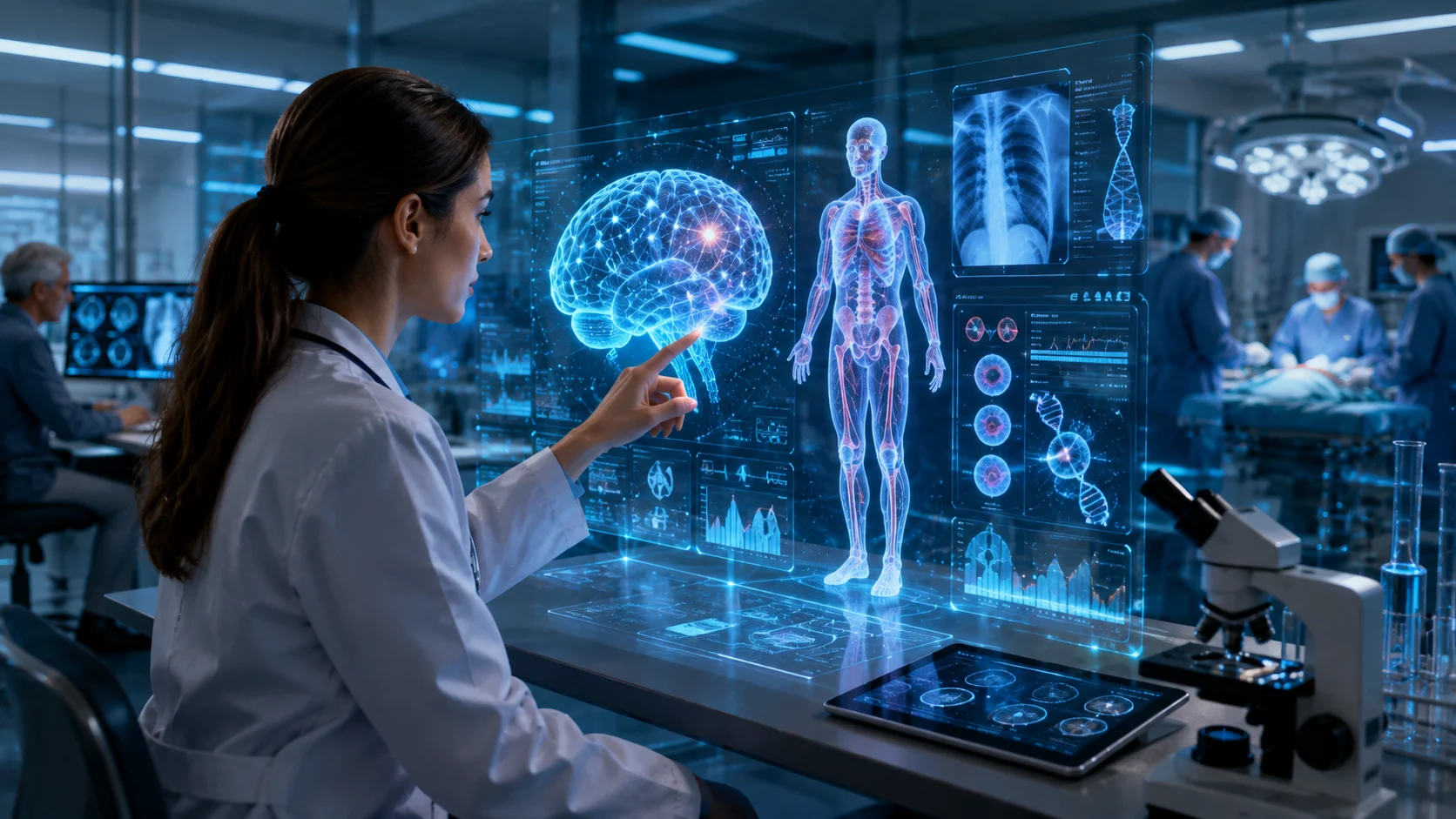
AI in Medicine: Uses, Benefits & What’s Next
Artificial intelligence is becoming an increasingly important part of modern medicine, not because it replaces doctors, but because it helps them work with more information, make faster decisions, and manage complex healthcare systems more efficiently. AI tools can analyze medical images, summarize patient records, detect patterns in laboratory data, assist with drug discovery, support diagnosis, and help hospitals predict demand. Technologies such as machine learning in healthcare, generative AI, medical imaging AI, predictive analytics, clinical decision support, natural language processing, and AI-powered diagnostics are now appearing across many areas of care. The most promising applications combine computational speed with professional judgment rather than attempting to automate every medical decision. This balance is essential because healthcare involves uncertainty, individual variation, safety, privacy, and human relationships.
The growth of AI in medicine is also changing how healthcare organizations think about data, workflow design, and patient experience. A doctor may use an AI assistant to summarize a long medical history before an appointment, while a radiologist may receive algorithmic support when reviewing an imaging study. Researchers can use machine learning to identify possible drug candidates, and hospitals can apply predictive models to staffing or capacity planning. Patients may encounter AI through remote monitoring tools, digital health assistants, or personalized treatment recommendations. These systems can create meaningful benefits when they are carefully validated and appropriately supervised. However, artificial intelligence can also make mistakes, reflect bias, or produce misleading outputs when used without safeguards. Understanding where AI genuinely helps is therefore more useful than assuming every medical problem requires automation.
How AI Is Being Used in Modern Medicine
Artificial intelligence in medicine generally refers to computer systems that can analyze healthcare information and perform tasks that support clinical, administrative, or research activities. These systems may work with medical images, laboratory values, electronic health records, genetic information, clinical notes, wearable-device data, and other forms of patient information. Some AI applications make predictions, while others classify information or generate summaries. Generative AI can help transform unstructured medical text into more useful formats, while machine learning models can identify patterns associated with disease risk. Computer vision is particularly important for analyzing medical images. The technology is broad, which means there is no single type of medical AI. Different applications use different models according to the clinical or operational problem being addressed.
Machine learning forms the foundation of many medical AI systems because healthcare generates large amounts of historical information that can be used to identify patterns. A model might learn from thousands of medical images labeled according to whether a particular abnormality was present. Another system could analyze historical patient records to estimate the probability of readmission after hospital discharge. These models do not replace medical knowledge, because statistical relationships must still be interpreted within clinical context. A prediction may indicate elevated risk without explaining exactly what should happen next. Clinicians need to combine model outputs with examination findings, patient preferences, comorbidities, and other factors that may not be captured fully in the data. Machine learning therefore becomes most useful when it strengthens rather than bypasses professional reasoning.
Natural language processing is another important technology because much of healthcare information exists in written form. Medical records contain physician notes, discharge summaries, pathology reports, referral letters, medication histories, and other documents that can be difficult to review quickly. AI can extract important details, organize timelines, summarize long records, and help clinicians locate relevant information more efficiently. Generative AI can also assist with drafting documentation after consultations, potentially reducing some of the administrative burden placed on healthcare professionals. These systems need careful review because medical language can be ambiguous, and incorrect summaries may omit clinically important details. The goal should be reducing repetitive documentation work while preserving the clinician’s responsibility for ensuring that the final medical record accurately reflects the patient’s situation.
Computer vision allows AI systems to analyze visual medical information such as X-rays, CT scans, MRI studies, pathology slides, retinal photographs, and dermatological images. These systems can highlight areas that appear unusual or help prioritize images that may require urgent review. In some workflows, AI serves as a second set of computational eyes, supporting specialists who already have extensive clinical expertise. The value can be significant when imaging departments face large workloads or when subtle patterns are difficult to detect consistently. However, performance can vary according to equipment, patient populations, image quality, and the conditions represented in training data. A model that performs well in one hospital may not behave identically elsewhere. Proper validation within the intended clinical environment is therefore essential before relying on imaging AI routinely.
The overall direction of medical AI is toward integration rather than isolated tools. Hospitals increasingly want systems that fit directly into existing workflows instead of forcing clinicians to open separate applications for every task. An imaging algorithm is more useful when its output appears naturally within the radiologist’s normal workstation. A documentation assistant becomes more valuable when it connects securely with the electronic health record. Predictive systems should send alerts only when action is meaningful rather than overwhelming staff with unnecessary warnings. This workflow-focused approach is important because technically impressive models can fail if they make clinical work more complicated. The future of AI in medicine will depend heavily on whether technology improves real healthcare processes rather than merely performing well in controlled demonstrations.
AI in Diagnosis and Medical Imaging
AI-assisted diagnosis is one of the most discussed uses of artificial intelligence in medicine. Diagnostic decisions often require clinicians to combine symptoms, physical examination findings, laboratory results, imaging, history, and knowledge of possible conditions. Machine learning can help identify patterns across these sources and suggest possibilities that deserve further consideration. A decision-support system might highlight that a combination of findings is associated with a particular disease or recommend additional testing according to established patterns. This can be valuable in complicated cases where many variables must be considered simultaneously. However, AI-generated suggestions should not be interpreted as final diagnoses automatically. Clinical judgment remains necessary because patients often have unusual presentations, multiple conditions, or contextual factors that are difficult for automated systems to understand completely.
Medical imaging provides one of the strongest environments for AI because images contain large quantities of structured visual information. Deep learning systems can be trained to recognize abnormalities in radiology, ophthalmology, pathology, dermatology, and other image-based specialties. An algorithm might flag suspicious areas on a chest image, detect possible retinal disease, or identify patterns in tissue slides that warrant closer examination. These systems can support specialists by reducing the chance that subtle findings are overlooked. They may also help prioritize urgent studies so potentially serious cases are reviewed sooner. Still, image interpretation is rarely completely independent of clinical context. Radiologists and other specialists often need information about symptoms, previous imaging, laboratory findings, or treatment history before reaching a meaningful conclusion.
AI can also help improve consistency in diagnostic workflows. Two experienced clinicians may sometimes interpret the same information differently, particularly when findings are subtle or borderline. A validated AI system can provide an additional standardized assessment that remains consistent across cases. This does not mean the algorithm is always correct, but it can serve as a useful comparison point. If the clinician and model disagree, the difference may encourage closer review or additional testing. In high-volume environments, this second-look function can be particularly valuable because fatigue and workload affect human performance. However, clinicians should avoid automation bias, where they trust a machine recommendation simply because it appears precise. AI should encourage better evaluation rather than discourage independent professional judgment.
Early detection is another area where medical AI may provide important benefits. Many diseases are easier to manage when identified before they become advanced, yet early signs can be subtle. Machine learning systems can analyze imaging, laboratory patterns, physiological signals, or historical records to identify patients who may deserve additional evaluation. For example, changes across repeated test results could potentially reveal a developing problem before any single value appears obviously abnormal. Predictive models may also help prioritize screening among higher-risk populations. These applications can be valuable when they lead to timely medical attention. However, excessive sensitivity can create false positives that cause anxiety, unnecessary testing, and additional healthcare costs. Diagnostic AI therefore needs careful calibration so improved detection does not simply produce more unnecessary interventions.
The future of AI diagnostics will likely involve combining multiple data types rather than analyzing one source in isolation. A system could eventually evaluate imaging, symptoms, laboratory results, genetic information, medications, and previous records together to provide a broader clinical assessment. Multimodal AI is particularly promising because real medical decisions rarely depend on only one form of information. A clinician might use such a system to review a complex patient’s history and identify connections that are difficult to notice manually. Yet broader access to patient data also increases privacy and security concerns. The more information a system receives, the greater the responsibility to protect it appropriately. Multimodal diagnostic AI could become powerful, but successful deployment will require strong validation, secure infrastructure, and transparent clinical oversight.
AI in Personalized Treatment and Precision Medicine
Personalized medicine aims to adapt healthcare decisions to the characteristics of an individual patient rather than relying exclusively on broad population averages. AI can support this approach by analyzing large combinations of clinical, genetic, behavioral, and environmental information. A model might identify that certain patient characteristics are associated with better responses to one treatment than another. Clinicians can then consider that information alongside guidelines, experience, and patient preferences. This is particularly relevant in fields such as oncology, where treatment decisions may depend on tumor characteristics, molecular markers, previous therapies, and overall health. Artificial intelligence can help organize these complex variables. However, recommendations remain useful only when the underlying evidence is strong enough to support meaningful differences in treatment.
Precision medicine often involves genomic information, which creates enormous analytical challenges because genetic datasets can be extremely large. Machine learning can help researchers identify relationships between genetic variations and disease risk, treatment response, or biological pathways. These patterns may contribute to more targeted therapies and better patient selection for clinical trials. AI can also help researchers interpret combinations of genetic signals that would be difficult to evaluate individually. Yet genetics rarely determines health outcomes on its own. Lifestyle, environment, age, other medical conditions, and many additional factors also influence disease. Overinterpreting genetic predictions can therefore be misleading. The most valuable AI applications combine genomic information with broader clinical context rather than treating DNA as a complete explanation of a patient’s future health.
AI may also help improve medication selection and dosing in certain situations. Patients can respond differently to the same medication because of age, kidney function, liver function, genetics, other drugs, diet, and underlying conditions. Predictive models can potentially combine these variables to support individualized dosing decisions or identify patients at greater risk of adverse effects. Clinical decision-support systems may also flag potential drug interactions or duplicated therapies. These tools can reduce some medication-related risks when they are designed and maintained carefully. However, automated alerts can become counterproductive if clinicians receive so many warnings that important ones are ignored. Intelligent systems need to prioritize information according to genuine clinical relevance. More alerts do not automatically mean safer care.
Cancer treatment illustrates the potential of AI-driven personalization particularly well. Oncology involves many different disease subtypes, and patients with apparently similar cancers can respond very differently to therapy. AI can help analyze pathology images, genomic information, laboratory findings, previous treatments, and clinical outcomes to identify patterns associated with particular responses. Researchers can use these insights to develop hypotheses or improve patient selection for targeted therapies. Clinicians may eventually receive more sophisticated decision-support tools capable of comparing an individual case with large collections of previous cases. Still, treatment decisions remain deeply personal and often involve balancing survival, side effects, quality of life, and patient goals. Artificial intelligence can provide information, but it cannot determine what matters most to an individual patient.
The long-term promise of personalized medicine is a transition from broad treatment categories toward increasingly precise decisions based on individual characteristics. AI could help make this possible by processing combinations of information too complicated for manual analysis alone. However, personalization also raises fairness concerns because models trained primarily on particular populations may perform less accurately for people who were underrepresented in the data. Healthcare organizations need diverse datasets and continuous evaluation to prevent personalized medicine from improving outcomes for some groups while leaving others behind. Patients should also understand how automated recommendations contribute to treatment decisions. AI-driven precision medicine will be most valuable when it expands clinical insight without making care feel less human or less transparent.
AI in Drug Discovery and Medical Research
Drug discovery is an expensive and time-consuming process involving many stages of research, testing, and clinical development. AI can help researchers examine enormous chemical and biological datasets to identify compounds that may deserve further investigation. Machine learning models can estimate molecular properties, predict interactions with biological targets, or help narrow the number of candidates requiring laboratory testing. This does not mean AI can simply invent a safe medicine instantly. Promising compounds still require rigorous experimental validation and clinical trials before they can become approved treatments. The value of artificial intelligence lies in improving the efficiency of early research stages. By prioritizing stronger candidates sooner, researchers may be able to spend laboratory resources more effectively and reduce some unnecessary experimentation.
Generative AI is adding new possibilities to molecular design. Instead of only evaluating known compounds, generative models can propose new molecular structures that satisfy particular desired characteristics. Researchers might specify properties such as binding potential, stability, or other chemical constraints, and the model can explore candidate structures within those boundaries. This dramatically expands the space scientists can search computationally. However, generated molecules remain hypotheses until laboratory experiments confirm their behavior. Chemical systems are extremely complex, and a compound that looks promising computationally may fail because of toxicity, absorption, manufacturing difficulty, or unexpected biological effects. AI therefore works best as a research accelerator rather than a substitute for experimental science. Computers can generate possibilities quickly, while laboratories determine which possibilities survive contact with reality.
AI can also support clinical trial design. Researchers need to decide which patients should participate, how outcomes will be measured, how sites are selected, and how data will be analyzed. Machine learning may help identify patients who appear eligible according to medical records, reducing some of the manual effort involved in recruitment. Predictive analytics can support site selection or estimate which trials may face enrollment challenges. Natural language processing can extract information from clinical documents and organize trial-related records. These applications can help research teams manage increasingly complex studies. However, patient selection must remain fair and aligned with clinical criteria. Algorithms should not accidentally exclude groups because training data or historical recruitment patterns failed to represent them adequately.
Medical research also benefits from AI-assisted literature analysis. Scientists face an enormous and constantly growing body of published information, making it increasingly difficult to read everything relevant to a specialized field. Natural language systems can help organize papers, summarize findings, identify relationships among studies, and support researchers searching for specific information. Generative AI can assist with brainstorming hypotheses or explaining complicated findings in simpler language. These tools can save time, but researchers still need to verify important claims and evaluate study quality themselves. A convincing summary does not reveal whether the underlying evidence was strong, whether a study had important limitations, or whether findings were reproduced independently. AI can improve information discovery while scientific judgment remains essential for determining which evidence deserves confidence.
The future of AI-powered medical research may involve tighter integration between computational models and laboratory systems. Automated laboratories could allow AI to propose experiments, robotic equipment to perform them, and analytical systems to interpret the resulting data. Researchers would then guide the process, refine hypotheses, and determine which findings deserve further investigation. This combination could accelerate repetitive experimentation in areas such as chemistry, molecular biology, and materials science. However, scientific discovery involves creativity, uncertainty, and unexpected results that may not fit automated assumptions. Human researchers will remain important for challenging models and recognizing when surprising outcomes point toward something genuinely new. AI could make experimentation faster, but major medical breakthroughs will continue to depend on rigorous scientific reasoning and validation.
AI in Hospitals, Clinical Workflows, and Patient Monitoring
Hospitals are complex organizations where clinical care depends on staffing, scheduling, bed availability, equipment, supplies, laboratories, imaging, transportation, and administrative coordination. AI can help improve these operations by forecasting demand and identifying patterns that affect capacity. Predictive systems may estimate emergency department volumes, expected admissions, or the likelihood that particular patients will require additional care. Administrators can use this information when planning staffing or managing hospital resources. Better forecasting can reduce delays and improve patient flow when implemented appropriately. However, operational predictions can never account perfectly for sudden events, outbreaks, accidents, or other unexpected pressures. Hospital leaders should therefore use AI as an additional planning tool rather than assuming it can predict every change in demand precisely.
Clinical documentation is another major opportunity because healthcare professionals spend considerable time entering information into electronic records. AI-powered documentation tools can capture conversations, organize relevant details, and produce draft notes for clinician review. This may allow doctors to focus more attention on patients during appointments rather than spending as much time typing. Generative AI can also summarize long histories before consultations or prepare discharge instructions in clearer language. The potential productivity benefit is significant because documentation is necessary but can contribute to workload and burnout. Nevertheless, every generated note needs appropriate verification. Incorrect medication names, symptoms, or follow-up instructions could create patient safety problems. Documentation AI should reduce clerical effort while keeping the clinician responsible for the accuracy of the final record.
Remote patient monitoring extends medical AI beyond hospitals and clinics. Wearable devices and home sensors can collect information such as heart rate, activity, sleep patterns, glucose levels, or other physiological signals. Machine learning can analyze these data streams and identify changes that may require attention. Instead of relying only on occasional clinic measurements, healthcare teams can gain a more continuous view of selected patients. This may be particularly useful for chronic conditions where trends over time matter. However, continuous monitoring can also generate enormous quantities of alerts, many of which may not require action. Systems need to distinguish meaningful changes from normal variation. Patients should also understand what is being monitored, who can access the information, and what happens when an alert occurs.
Predictive models may help hospitals identify patients who appear at increased risk of deterioration, complications, or readmission. A system could analyze vital signs, laboratory values, diagnoses, medications, and previous utilization to generate a risk estimate. Clinicians might use this information to prioritize monitoring or discharge planning. The potential benefit is earlier attention for patients who might otherwise deteriorate unnoticed. Yet prediction is not the same as diagnosis, and false alarms can create unnecessary workload. Models may also perform differently across hospitals because patient populations and clinical practices vary. Healthcare organizations need local validation and clear procedures explaining how risk scores should influence care. A useful model supports clinical awareness without becoming an unquestioned authority.
AI can also help improve communication across multidisciplinary healthcare teams. Patients with complex conditions may interact with physicians, nurses, pharmacists, therapists, social workers, and other professionals. Important information can become scattered across different notes and systems. AI-assisted summarization could create concise timelines showing major diagnoses, medication changes, procedures, and outstanding tasks. This may help clinicians understand a patient’s situation faster during handoffs or consultations. Communication tools can also translate medical information into language that is easier for patients to understand. However, simplification should not remove important nuance. The future of hospital AI will depend heavily on whether it reduces information overload while preserving the context professionals need to make safe decisions.
Benefits of AI in Medicine
One of the biggest benefits of artificial intelligence in medicine is the ability to process large amounts of information quickly. Healthcare professionals increasingly work with complex records containing imaging, laboratory results, medications, history, clinical notes, and monitoring data. Reviewing every available detail manually can be difficult, particularly during time-sensitive situations. AI can summarize relevant information or identify patterns requiring attention. This can reduce the amount of time clinicians spend searching through records and allow them to focus on interpretation. Faster information processing may also improve coordination among healthcare teams. The benefit is not that AI “knows more” than clinicians automatically, but that it can organize information at a scale that would otherwise create significant cognitive and administrative burden.
AI may also improve consistency across selected medical tasks. Human performance naturally varies according to workload, experience, fatigue, and environmental conditions. A validated algorithm can apply the same analytical process repeatedly across thousands of cases. This can be useful in medical imaging, screening, documentation, and risk estimation. Consistency does not mean perfect accuracy, because an algorithm can make systematic mistakes if its training data or design is flawed. The strongest approach combines human and machine strengths. AI can provide repeatable analysis, while clinicians contribute contextual understanding and the ability to question unusual results. When both perspectives are used appropriately, healthcare teams may identify issues that either humans or algorithms could miss independently. Collaborative systems are therefore more realistic than fully automated medicine.
Access to healthcare could potentially improve through carefully designed AI applications. Remote monitoring, digital health tools, automated administrative support, and virtual assistance may allow healthcare organizations to serve more people without increasing workload at the same rate. In areas with limited specialist availability, AI-assisted screening could help determine which patients require urgent referral. Translation and communication tools may make health information easier to understand across language barriers. However, technology should not be presented as a substitute for healthcare access when patients actually need clinicians. Digital tools can support care, but they cannot solve shortages of hospitals, trained professionals, medications, or infrastructure by themselves. AI can expand certain forms of support while broader healthcare systems remain essential.
Administrative efficiency is another major benefit. Healthcare organizations spend enormous resources on scheduling, billing, coding, documentation, prior authorization, record management, and other non-clinical activities. AI can automate portions of these workflows and help employees locate information faster. Reducing administrative burden could allow clinicians and staff to devote more time to patients and less time to repetitive paperwork. Hospitals may also use predictive analytics to improve staffing and resource allocation. These efficiency gains matter because healthcare costs are influenced by operational complexity as well as medical treatment. However, poorly designed automation can create new administrative problems if employees must constantly correct generated outputs. The objective should be simplifying workflows rather than adding another technological layer that staff must manage.
Scientific progress represents a broader long-term benefit. AI can help researchers analyze biological data, search medical literature, identify potential drug candidates, and design experiments more efficiently. These capabilities may accelerate discoveries that would otherwise require far more time and manual effort. Artificial intelligence can also connect information across fields, helping scientists notice relationships among genetics, imaging, clinical outcomes, and molecular biology. The most exciting potential is not replacing researchers but increasing the number of ideas and experiments they can explore. Scientific validation will remain necessary because computational predictions do not become medical truth automatically. When AI is combined with rigorous research methods, it can become a powerful tool for expanding human understanding of disease and treatment.
Risks, Limitations, and Ethical Challenges
Accuracy is one of the most serious limitations of AI in medicine because mistakes can directly affect patient care. A model may produce a false positive, miss an important abnormality, misunderstand a clinical note, or generate incorrect information that sounds convincing. These errors can occur even when a system performs well on average. Healthcare decisions often involve unusual cases that were poorly represented in training data, making generalization difficult. Organizations therefore need strong validation before deploying AI clinically. Performance should also be monitored after implementation because patient populations, clinical practices, and data systems change over time. High average accuracy should not hide specific groups or situations where the model performs poorly. Medical AI must be evaluated according to real clinical consequences rather than impressive technical metrics alone.
Bias is another important concern. If training data underrepresents certain populations, a model may perform less accurately for those patients. Historical healthcare data can also reflect unequal access to care, differences in diagnosis, or other social patterns that an algorithm may reproduce unintentionally. A system trained using past decisions may learn the biases embedded in those decisions. Healthcare organizations should therefore evaluate performance across demographic and clinical subgroups rather than relying on one overall accuracy score. Diverse development teams and representative datasets can help, but bias cannot always be removed completely. Ongoing monitoring remains necessary after deployment. AI should contribute to more equitable care rather than making existing disparities harder to detect behind apparently objective mathematical outputs.
Patient privacy becomes especially important as medical AI requires access to sensitive health information. Clinical records can contain diagnoses, medications, genetic information, mental health details, reproductive information, and other highly private data. Healthcare organizations need strict controls regarding who can access this information and how it is processed. Employees should not upload patient records into unapproved AI systems simply because those tools are convenient. Vendors also need clear security standards and appropriate agreements governing healthcare data. De-identification can reduce some risk, but medical datasets can sometimes remain identifiable when combined with other information. Trust is essential in healthcare, and patients need confidence that technological innovation will not expose their personal medical information unnecessarily.
Automation bias can create another safety problem when clinicians begin trusting AI recommendations too readily. A system that performs well most of the time may encourage users to accept outputs without independent evaluation. This is particularly dangerous when the model fails on unusual cases. Interface design can influence this behavior because highly confident visual displays may make uncertain predictions appear more authoritative than they actually are. Clinicians need training about model limitations and should understand when recommendations deserve additional investigation. AI systems can also provide uncertainty estimates or explanations where appropriate, helping users evaluate outputs more critically. The goal is not to make clinicians distrust technology completely. Instead, healthcare organizations should build workflows where human expertise and automated analysis continuously check one another.
Ethical questions extend beyond technical performance. Patients may want to know when AI contributes to important medical decisions, particularly when systems influence diagnosis, treatment, or access to care. Responsibility must remain clear if an automated recommendation causes harm. Developers, healthcare organizations, and clinicians may each influence how the technology functions, creating complicated questions around accountability. Commercial incentives can also shape which AI tools are deployed, even when another solution might better serve patients. Healthcare leaders need ethical frameworks that prioritize patient welfare alongside efficiency and innovation. Artificial intelligence should not become an excuse for reducing transparency or personal attention. The most responsible medical AI systems will strengthen the relationship between patients and healthcare professionals rather than making care feel less accountable.
What’s Next for AI in Medicine?
Generative AI is likely to become more deeply integrated into clinical workflows over the coming years. Instead of operating as a separate chatbot, future systems may work directly inside electronic health records, imaging platforms, and hospital communication tools. Clinicians could request concise summaries of a patient’s history, generate draft documentation, or ask questions about approved clinical information without leaving their normal software. AI might also help prepare patient instructions at appropriate reading levels or translate information into different languages. These capabilities could reduce administrative friction substantially. However, healthcare organizations will increasingly demand systems that ground responses in verified information rather than producing answers from general model knowledge alone. Reliability will matter more than impressive conversational ability in serious clinical environments.
Multimodal medical AI could represent an even larger change. Future systems may analyze combinations of medical images, laboratory values, symptoms, genetic information, clinical notes, and physiological signals simultaneously. This more closely reflects how clinicians actually reason because medical decisions rarely depend on one type of information. A multimodal assistant could help organize a complicated case and identify relationships that deserve attention. Researchers may also use these systems to uncover connections among biological and clinical datasets. The challenge will be validating models that are much more complicated than single-purpose systems. It may become difficult to understand exactly which input influenced a recommendation. Healthcare organizations will need new evaluation methods capable of testing not only accuracy but also reliability across diverse clinical environments.
AI agents could eventually handle longer administrative and clinical-support workflows. An agent might gather relevant records before an appointment, identify missing laboratory results, prepare a draft summary, and notify staff that additional information is required. Hospital operations agents could coordinate scheduling, supply management, and routine administrative tasks. Clinical agents would need much stricter boundaries because autonomous medical actions carry higher risk. The likely path is gradual expansion from summarization toward recommendations and then carefully controlled actions. Human approval will remain central wherever consequences are significant. Healthcare systems may adopt agentic AI more slowly than industries where errors are easier to reverse. Nevertheless, the ability to coordinate multi-step processes could eventually become one of the most valuable forms of medical automation.
Robotics and physical AI could also expand within surgery, rehabilitation, hospital logistics, and patient support. Surgical robots already demonstrate how machines can assist clinicians with precise physical procedures, while future systems may incorporate more intelligent perception and planning. Rehabilitation robots could adapt exercises according to patient performance, and hospital robots may transport supplies or perform repetitive logistical tasks. AI-powered prosthetics may become increasingly responsive to user movement and intention. These technologies will progress more slowly than software-only AI because physical systems must meet demanding safety and reliability standards. A software error can sometimes be corrected immediately, while a robotic mistake can cause physical harm. Medical robotics will therefore require extensive validation, hardware reliability, and professional supervision as capabilities increase.
The future of AI in medicine will ultimately depend on whether technology improves patient outcomes while supporting the professionals responsible for care. The most valuable systems may not be those that appear most human or autonomous, but those that quietly reduce errors, organize information, accelerate research, and remove unnecessary administrative work. Healthcare organizations will become more selective as they gain experience with artificial intelligence. Tools will increasingly be judged according to clinical value, workflow improvement, safety, cost, and patient trust rather than novelty. Doctors, nurses, researchers, administrators, and patients will all influence how the technology develops. Artificial intelligence could become one of medicine’s most important tools, but its greatest impact will come when it strengthens human healthcare rather than attempting to replace it.
Frequently Asked Questions
What is AI in medicine?
AI in medicine refers to the use of artificial intelligence technologies such as machine learning, generative AI, natural language processing, predictive analytics, and computer vision in healthcare. These systems can support diagnosis, medical imaging, research, documentation, patient monitoring, hospital operations, and treatment planning.
How is AI used by doctors?
Doctors can use AI to summarize medical records, review images, identify potential risk patterns, draft clinical documentation, and retrieve relevant patient information. AI typically acts as a decision-support tool rather than replacing the clinician responsible for diagnosis and treatment.
What are the biggest benefits of AI in healthcare?
Major benefits include faster information processing, improved workflow efficiency, greater consistency, earlier identification of certain risks, reduced administrative work, and faster medical research. The strongest benefits appear when AI complements professional judgment instead of attempting to automate complex medical decisions completely.
Can AI diagnose diseases better than doctors?
AI can outperform humans on some narrowly defined tasks, particularly when analyzing specific kinds of structured data or images. However, complete diagnosis involves context, examination, communication, uncertainty, and clinical judgment, so a strong result on one diagnostic task does not mean AI can replace doctors generally.
Will AI replace doctors in the future?
AI is more likely to change how doctors work than replace them entirely. Physicians will increasingly use AI for analysis, documentation, prediction, and decision support while remaining responsible for clinical judgment, communication, ethics, treatment decisions, and the human relationship at the center of medical care.