

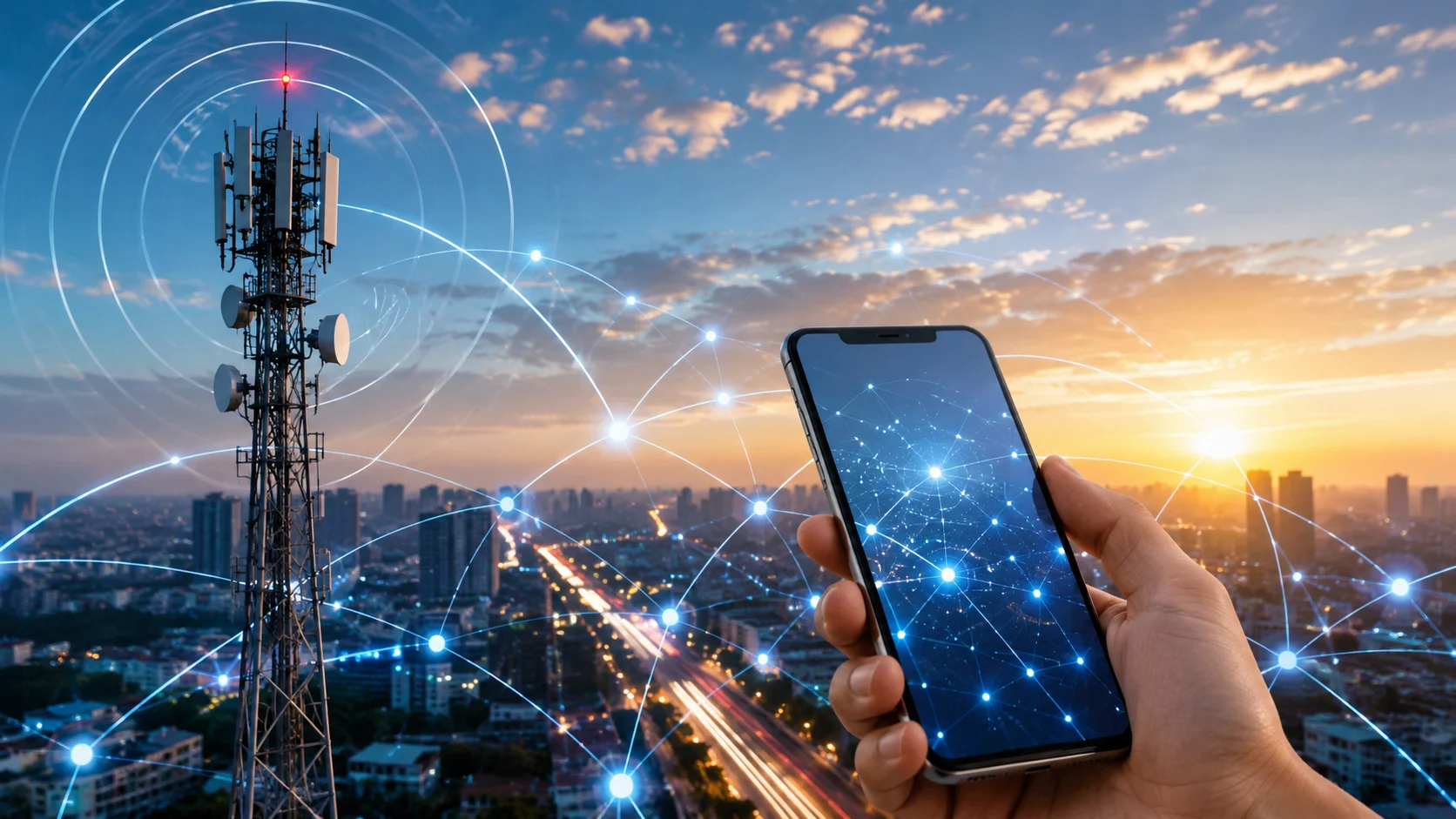
GSM Meaning: How Mobile Communication Works
GSM stands for Global System for Mobile Communications, a cellular communication standard that played a major role in making mobile phones practical and widely interoperable around the world. It was designed to provide digital voice calling, text messaging, subscriber identification, roaming, and later basic mobile data services over cellular networks. Unlike earlier analog mobile systems, GSM transmitted voice and signaling information digitally, helping improve capacity, reliability, and service flexibility. One of its most recognizable innovations was the SIM card, which separated a subscriber’s identity from the physical mobile phone. GSM became closely associated with second-generation, or 2G, mobile networks and helped establish many concepts still familiar to mobile users today. Even as modern smartphones primarily rely on 4G and 5G, understanding GSM explains how cellular communication developed.
A GSM network does much more than simply connect one mobile phone directly to another. It divides geographic areas into cells, uses radio frequencies to communicate between phones and base stations, verifies subscribers through network databases, and routes calls or messages through switching infrastructure. When someone makes a call, the network identifies the phone, checks whether service is allowed, allocates radio resources, locates the receiving party, and establishes a communication path. Similar coordination occurs when a user sends an SMS message or moves between coverage areas. GSM also introduced standardized international roaming that made it easier for compatible subscribers to use mobile service outside their home networks. This guide explains GSM meaning, network architecture, communication processes, SIM cards, calls, SMS, mobile data, security, advantages, limitations, and its relationship with modern cellular technology.
What Is GSM?
GSM is a digital cellular network standard originally developed to create a more consistent mobile communication system across different countries and network operators. The abbreviation stands for Global System for Mobile Communications, although its historical development began under an earlier European project name. GSM became strongly associated with 2G because it replaced many incompatible first-generation analog mobile systems with standardized digital technology. It supported voice communication, subscriber authentication, international roaming, SMS messaging, and several supplementary services. Network operators could deploy compatible infrastructure while manufacturers produced handsets designed to work across multiple GSM networks and frequency bands. This standardization helped mobile communication expand beyond isolated national systems into a more connected international ecosystem.
The word cellular is important because GSM networks divide large service areas into smaller geographic zones called cells. Each cell is served by radio equipment that communicates with mobile devices located within its coverage area. Reusing frequencies across appropriately separated cells allows operators to support far more subscribers than one high-powered transmitter could handle efficiently. As a user moves, the network can transfer the active connection from one cell to another through a process known as handover. This allows someone to continue a call while traveling through different coverage areas. Cellular design therefore combines radio engineering, location management, switching, and mobility control to provide continuous service over a large region.
GSM uses digital communication rather than transmitting voice as a continuously varying analog radio signal. A person’s speech is converted into digital information, encoded, transmitted through the radio network, and reconstructed at the receiving side. Digital processing allows the system to use available radio spectrum more efficiently and apply authentication, encryption, error handling, and network management techniques. GSM also uses structured time slots so multiple users can share portions of the same radio carrier. This approach is closely associated with Time Division Multiple Access, or TDMA, within GSM radio communication. By organizing radio resources carefully, the network can serve many simultaneous users without assigning every subscriber an entirely separate frequency.
One of GSM’s most influential ideas was separating subscriber identity from the handset through the Subscriber Identity Module, commonly called the SIM card. The SIM contains information that allows the network to recognize and authenticate a subscriber securely. A user could traditionally move a compatible SIM between GSM phones and retain the same subscriber identity and service relationship. This differs from systems where identity was more tightly associated with the device itself. Modern mobile networks have expanded SIM technology through smaller physical formats and embedded SIMs, but the underlying concept remains familiar. The separation between subscriber identity and handset became an important part of the mobile ecosystem.
Although GSM is often discussed as if it were synonymous with all cellular service, it represents a particular generation and family of technologies. Modern LTE and 5G networks use architectures and radio technologies that are substantially different from classic GSM. Nevertheless, many concepts associated with GSM influenced later mobile standards, including subscriber authentication, roaming relationships, network databases, mobility management, and standardized operator interoperability. Some networks have continued supporting GSM for legacy phones, machine-to-machine communication, or limited service compatibility, while others have retired 2G infrastructure. The meaning of GSM today is therefore both historical and practical. It describes a foundational mobile standard whose ideas helped shape the cellular systems used by billions of people.
How Does GSM Mobile Communication Work?
GSM communication begins when a mobile phone powers on and searches for a compatible cellular network. The handset listens for broadcast information transmitted by nearby base stations and evaluates available cells according to signal quality and network rules. Once an appropriate cell is selected, the phone attempts to register with the network using subscriber information associated with its SIM. The network checks whether the subscriber is authorized and records the approximate area where the device is currently located. This registration allows the network to find the phone when an incoming call or message arrives. The process can occur again when the user moves into another location area or returns after losing coverage.
When a user starts a voice call, the mobile phone first sends signaling information to the network rather than immediately transmitting full voice traffic. The serving radio network receives the request and passes relevant information toward switching infrastructure responsible for establishing the call. The network verifies service availability, assigns suitable radio resources, and determines where the called number should be routed. If the recipient is another mobile subscriber, additional network systems locate that subscriber and alert the receiving phone. Once the recipient answers, the network establishes the communication path required for conversation. All of this coordination can happen quickly enough that users experience it simply as dialing a number and hearing the phone ring.
Radio communication between a GSM handset and base station is carefully organized because many subscribers may need service within the same cell. GSM divides portions of available radio spectrum into carriers and then uses time slots so several users can share a carrier. Each active connection receives scheduled opportunities to transmit and receive information rather than continuously occupying the entire radio channel. The phone and network must remain synchronized so information appears in the correct time slots. Power control can also adjust how strongly the handset transmits, helping reduce unnecessary interference and battery consumption. These techniques allow GSM infrastructure to use limited radio spectrum more efficiently across busy coverage areas.
Mobility management becomes especially important when a subscriber travels while connected to the network. A phone continuously measures signals from its serving cell and selected neighboring cells, then reports information that can help the network manage coverage. If another cell becomes more appropriate during an active call, the network can perform a handover and move the connection to new radio resources. The user may not notice the transition when everything operates correctly. GSM also groups cells into larger location areas so phones do not need to report every small movement while idle. This balances the need to locate subscribers against the signaling overhead created by continuous tracking.
Incoming calls work in the opposite direction because the network must first determine where the receiving subscriber can currently be reached. Subscriber databases contain information linking a mobile identity with the serving network region or switching system. The network sends a paging request through cells in the relevant area, and the target phone responds when it recognizes its identity. Authentication and radio channel assignment then take place before the call is connected. If the phone is switched off or unavailable, the network may route the call to voicemail or another configured service. This location and paging process is one of the fundamental reasons mobile users can receive calls while moving through a wide geographic area.
GSM Network Architecture and Main Components
A GSM network is built from several coordinated subsystems rather than a single tower or switching center. The mobile device communicates with radio access equipment, while switching systems route calls and manage mobility across larger areas. Subscriber databases store information needed for authentication, service authorization, and location management. Operations systems help network providers configure infrastructure and monitor performance. These components work together so a person can travel through different cells while retaining service under one subscriber identity. Understanding the architecture makes GSM easier to visualize because each part performs a specific function within the broader communication process.
The Mobile Station is the part of the GSM system closest to the user and traditionally consists of the mobile equipment plus the SIM. The handset provides the radio hardware, microphone, speaker, display, processor, and software needed to communicate with the cellular network. The SIM provides subscriber-related identity and authentication information used to establish an authorized relationship with the operator. GSM therefore distinguishes between the person or subscription using the network and the physical device carrying the SIM. This separation allows operators to manage both subscriber identities and equipment identifiers. It also helped create the familiar practice of moving a SIM between compatible mobile phones.
The Base Station Subsystem handles much of the radio communication between mobile devices and the core GSM network. A Base Transceiver Station, often abbreviated BTS, contains radio equipment that communicates with phones in one or more cells. Multiple BTS sites can be coordinated by a Base Station Controller, or BSC, which manages radio resources and certain handover activities. The controller helps determine which channels should be assigned and how connected users move between cells within its area. This architecture prevents every individual tower from needing to make independent network-wide decisions. It also provides a structured bridge between radio access and the switching systems responsible for calls and mobility.
The Network and Switching Subsystem contains components that manage call routing, subscriber mobility, and connections to other networks. The Mobile Switching Center, commonly called MSC, plays a central role by handling call control and coordinating communication between mobile users and external telephone networks. Subscriber information may be stored in the Home Location Register, or HLR, which maintains records related to a subscriber’s home network and authorized services. A Visitor Location Register, or VLR, can maintain temporary information about subscribers currently operating within a particular switching area. These systems allow GSM to support users who move between cities, regions, and networks while remaining reachable.
Authentication and equipment databases provide additional security and management functions within classic GSM architecture. The Authentication Center works with subscriber information to help verify that a SIM requesting service possesses the expected authentication credentials. An Equipment Identity Register can be used to manage identifying information associated with mobile devices, including equipment that may be blocked under operator policies. Network management systems monitor base stations, switching equipment, alarms, capacity, and operational performance. As cellular systems evolved, network architectures became more packet-oriented and software-driven, but these GSM components remain useful for understanding the foundations of mobile networking. They demonstrate how radio access, identity, switching, and databases combine to deliver cellular service.
How SIM Cards, Authentication, and Roaming Work in GSM
The SIM card is one of the most recognizable elements of GSM because it represents the subscriber’s relationship with the mobile operator. SIM stands for Subscriber Identity Module, and the card contains information used by the network to recognize and authenticate the subscription. One important identifier is the International Mobile Subscriber Identity, commonly abbreviated IMSI. The network generally avoids transmitting permanent identity information more often than necessary and can use temporary identifiers during normal communication. The SIM also contains secret authentication material that should not be exposed directly during ordinary network operation. These features helped GSM make subscriber identity portable while providing a structured authentication process.
Authentication is designed to prove that the SIM requesting service possesses the correct secret information without simply sending that secret across the radio connection. The network can issue a challenge, and the SIM performs a calculation using its stored authentication key. The resulting response is returned to the network, which compares it with the expected value. If the results match, the subscriber can be considered authenticated according to the GSM process. Related calculations can also generate material used for radio encryption. This challenge-response approach is significantly safer than repeatedly transmitting a reusable secret value over the air where it could be intercepted directly.
The physical phone also has an identity separate from the SIM. Mobile equipment commonly uses an International Mobile Equipment Identity, or IMEI, to identify the handset itself. This allows networks to distinguish the device from the subscriber using it. A person can theoretically move one SIM between several compatible phones while retaining the same subscription, yet each handset still has its own equipment identity. Operators may use equipment information for device management, troubleshooting, or restrictions under applicable policies. The distinction between IMSI and IMEI is therefore important: one primarily identifies the mobile subscription, while the other identifies the physical mobile equipment.
Roaming allows a subscriber to use service on a compatible network outside the home operator’s normal coverage area. When the phone connects to a visited GSM network, that network communicates with systems associated with the subscriber’s home operator. Subscriber information and authentication procedures help determine whether roaming service should be provided and which services are permitted. The visited network temporarily handles radio access and local mobility while billing and service relationships remain tied to the home subscription. This standardized cooperation between operators became one of GSM’s most influential commercial advantages. Travelers could use compatible mobile service internationally without purchasing a completely separate phone and identity for every country.
Modern mobile roaming is considerably more complex because smartphones can move among several generations of cellular technology and data services. Nevertheless, the GSM era established the expectation that subscriber identity and operator agreements could enable service across network boundaries. SIM technology also evolved from large removable cards into mini, micro, nano, and embedded formats. An eSIM can provide subscriber credentials without requiring the traditional removable plastic card, although operator provisioning and authentication concepts remain central. Modern authentication systems have also become more sophisticated than early GSM implementations. The continued importance of SIM-based identity shows how strongly GSM influenced later mobile network design even after radio technology moved far beyond 2G.
GSM Voice Calls, SMS, GPRS, and EDGE
Voice calling was one of the primary services GSM was designed to deliver. A user’s speech is captured by the handset, converted into a digital form, compressed using a voice codec, and prepared for transmission across the radio interface. The GSM network assigns traffic resources and carries the encoded speech toward the appropriate switching destination. At the receiving side, the process is reversed so the listener hears reconstructed audio. Error protection techniques help maintain understandable speech when radio conditions are imperfect. Digital voice represented a major shift from first-generation analog cellular systems and allowed operators to support more structured security, capacity management, and supplementary services.
SMS, or Short Message Service, became one of the most culturally significant features associated with GSM. It allows short text messages to be transmitted through signaling and messaging infrastructure rather than requiring an active voice conversation. A message can be sent toward a Short Message Service Center, which stores and forwards it to the recipient. If the receiving phone is temporarily unavailable, the system can attempt delivery again according to operator configuration. This store-and-forward model helped make SMS reliable even when both users were not connected at exactly the same moment. Text messaging eventually became a major form of everyday communication long before modern internet-based messaging apps became widespread.
Original GSM was designed mainly around circuit-switched communication rather than the always-connected packet data experience associated with modern smartphones. Early data services could establish connections that behaved more like dedicated communication circuits and offered limited speeds by current standards. As demand for internet access increased, GSM networks were enhanced with General Packet Radio Service, or GPRS. GPRS introduced packet-switched data capabilities that allowed network resources to be shared more dynamically among users. It is often associated with the transition toward what was informally called 2.5G technology. Services such as basic email, lightweight web browsing, and machine communication became more practical than they had been on earlier mobile data connections.
EDGE, meaning Enhanced Data Rates for GSM Evolution, improved data performance further by using more efficient radio modulation under suitable conditions. It is sometimes described as a 2.75G technology because it extended the capabilities of GSM-based networks before widespread 3G adoption. EDGE could provide better data rates than standard GPRS without requiring operators to replace the entire underlying GSM ecosystem immediately. Actual user speeds depended on radio quality, device capability, network configuration, and available capacity. By modern broadband standards, EDGE is extremely slow, but it represented an important step toward mobile internet access. It also demonstrated how operators could evolve an existing network gradually through compatible enhancements.
Modern mobile data works very differently because LTE and 5G networks are designed around high-speed packet-based architectures from the beginning. Voice calling has also moved toward technologies such as Voice over LTE and voice services within modern mobile cores rather than relying entirely on classic GSM circuit switching. Nevertheless, understanding GSM voice, SMS, GPRS, and EDGE shows how cellular networks evolved from basic calling toward mobile computing. GSM established the digital subscriber and roaming framework, GPRS introduced more practical packet data, and EDGE improved data efficiency further. Each stage addressed growing expectations without discarding the entire mobile ecosystem immediately. This evolutionary approach became a recurring theme throughout cellular technology development.
GSM vs CDMA, 3G, 4G, and 5G
GSM and CDMA are often compared because both became prominent approaches during the expansion of second-generation mobile service. GSM organizes radio access using frequency channels and time slots within its classic implementation, while CDMA systems use code-based techniques that allow several users to share radio resources differently. CDMA stands for Code Division Multiple Access and was particularly influential in certain countries and operator networks. One consumer-facing difference historically involved subscriber identity, because GSM became strongly associated with removable SIM cards while some CDMA services tied subscriptions more closely to handsets. Over time, however, mobile standards evolved and these simple distinctions became less useful for describing modern networks.
The transition from 2G to 3G introduced higher data rates and more capable mobile internet services. GSM operators often followed an evolution path through GPRS and EDGE before deploying third-generation technologies such as UMTS and WCDMA. Although WCDMA contains “CDMA” in its name, it belongs to the broader 3G evolution associated with GSM operators rather than being identical to earlier 2G CDMA systems. This terminology can confuse people who assume GSM and CDMA remained two completely separate branches forever. Cellular standards increasingly converged around global technology families as data requirements grew. The movement toward 3G shifted the mobile phone from primarily a voice-and-text device toward a more capable internet-connected computer.
Fourth-generation networks introduced LTE, or Long Term Evolution, which fundamentally changed mobile network design toward high-speed packet-based communication. LTE is not simply a faster version of classic GSM because it uses different radio access technology and a different core network architecture. It supports much higher data rates, lower latency, more efficient spectrum use, and applications that would be impractical over 2G. LTE initially focused heavily on packet data, with voice increasingly delivered through Voice over LTE rather than traditional circuit-switched GSM channels. Modern smartphones may support several network generations simultaneously for compatibility. The mobile network chooses appropriate technologies based on coverage, device capability, operator configuration, and available services.
Fifth-generation mobile technology extends cellular capabilities further through higher potential capacity, lower latency, flexible spectrum use, and support for a wider range of device and application types. 5G networks are designed for smartphones but can also support fixed wireless access, industrial applications, connected devices, private networks, and other specialized workloads. Their radio technology and network architecture are far removed from classic GSM, yet both belong to the broader history of cellular communication. Many concepts remain recognizable, including cells, subscriber authentication, mobility, roaming, and operator-managed spectrum. The difference is that modern systems implement those concepts using far more advanced radio, software, cloud, and core-network technologies.
GSM should therefore be viewed as an important foundation rather than the current definition of mobile communication as a whole. A modern phone may contain support for several technologies, but its everyday high-speed internet connection is normally provided by newer cellular generations where those networks are available. Operators in many markets have been reducing or retiring older 2G infrastructure so radio spectrum can be reused for newer services. Other networks may retain limited GSM coverage because legacy equipment, alarms, payment terminals, or machine-to-machine systems still depend on it. The exact situation varies by operator and country. Understanding the generations helps explain why an old GSM-only phone may no longer work everywhere even though newer smartphones still provide cellular service.
Advantages and Limitations of GSM
One of GSM’s greatest advantages was international standardization. Earlier mobile systems were fragmented, making it difficult for one handset or subscriber relationship to function across different national networks. GSM created a common technical framework that manufacturers and operators could implement across large regions. This encouraged competition in handset manufacturing while making international roaming much more practical. Subscribers gained a familiar service identity through the SIM, and operators could build commercial roaming agreements around standardized network behavior. The resulting ecosystem played an important role in turning mobile communication from a specialized service into a mass-market technology used across much of the world.
The SIM-based subscriber model provided another major benefit because it gave users greater flexibility over devices. A subscriber could move a SIM into another compatible GSM handset without necessarily changing the underlying mobile account. This was useful when upgrading phones, replacing damaged equipment, or using a temporary device. Operators also gained a standardized way to authenticate subscriptions and manage services independently from handset manufacturing. The concept continued into later generations and remains visible in modern SIM and eSIM systems. Although current smartphones integrate more device security and cloud identity than early GSM phones, the basic distinction between subscriber identity and physical equipment remains extremely influential.
GSM also supported reliable voice communication and SMS using infrastructure that could operate efficiently with limited radio bandwidth. Its cellular architecture allowed frequencies to be reused geographically, while time-based channel sharing supported multiple users on available carriers. For its era, this represented an important improvement in capacity and service management compared with analog mobile systems. Digital technology also made features such as subscriber authentication, encryption, call forwarding, caller identification support, and standardized messaging easier to provide. Operators could expand networks gradually by adding cells and capacity where demand increased. These characteristics helped GSM scale from an emerging standard into a widely deployed global communication platform.
Its limitations have become increasingly obvious as mobile usage shifted toward data-intensive applications. Classic GSM was designed when voice calls were the central mobile service, so its data capabilities are extremely limited compared with LTE and 5G. GPRS and EDGE improved internet access, but their performance cannot support many modern applications effectively. Older radio security mechanisms are also weaker than those used in newer generations, and legacy network design can create risks that modern standards address more strongly. Spectrum used for 2G can often deliver greater capacity when reassigned to newer technologies. These factors have encouraged operators to reduce dependence on GSM where newer networks provide adequate coverage and device support.
Another limitation is the large amount of legacy equipment that can remain dependent on GSM long after smartphone users have moved to newer technologies. Alarm systems, elevators, industrial devices, older vehicle trackers, payment terminals, utility meters, and machine-to-machine equipment may contain 2G-only modems. Retiring GSM can therefore require more than simply telling consumers to purchase modern phones. Organizations need to identify embedded devices and upgrade connectivity before legacy service disappears in their region. This illustrates both GSM’s success and its long-term challenge: the technology became deeply embedded in systems that were expected to operate for many years. Migration planning is therefore an important part of GSM retirement.
GSM Security, Legacy Use, and Relevance Today
GSM included security mechanisms that were significant improvements over many earlier analog cellular systems. Subscriber authentication used challenge-response methods so a permanent secret key did not need to be openly transmitted across the radio interface. The network could also apply encryption to portions of communication between the handset and cellular infrastructure. Temporary subscriber identifiers helped reduce unnecessary exposure of permanent identity information during routine operation. These mechanisms reflected the security needs and computational limitations of the period when GSM was designed. They established an important principle that mobile networks should authenticate subscribers and protect radio communication rather than treating the wireless link as inherently trustworthy.
However, classic GSM security is no longer considered strong enough for many modern threat environments. Some original cryptographic algorithms and authentication assumptions have weaknesses compared with later mobile standards. GSM traditionally authenticates the subscriber to the network but does not provide the same form of mutual authentication found in newer generations, creating opportunities for certain types of rogue base station attacks. Attackers with specialized capabilities may attempt to exploit downgrade behavior or legacy network weaknesses. Modern operators and devices use multiple controls to reduce these risks, but security depends on the network configuration and available technology. Newer cellular generations were designed with stronger authentication and cryptographic protections.
Legacy GSM can still provide practical value in areas where operators maintain coverage and newer infrastructure is unavailable or unnecessary for particular devices. Basic voice and SMS require far less bandwidth than modern video streaming or cloud applications. Low-data machine-to-machine equipment may also function adequately over legacy service when continued operator support exists. Rural coverage patterns can sometimes differ between network generations because operators deploy frequencies and towers according to local conditions. Nevertheless, organizations should not assume GSM will remain available indefinitely. Devices expected to operate for many years should be evaluated for compatibility with modern LTE, 5G, or appropriate IoT connectivity technologies.
The continuing retirement of older network generations is driven partly by the value of radio spectrum. Operators possess limited spectrum licenses, and frequencies dedicated to 2G cannot simultaneously provide their full potential capacity through newer technologies. Reallocating spectrum can improve mobile broadband capacity and simplify network operations by reducing the number of legacy systems that must be maintained. Shutdown decisions also depend on regulatory requirements, emergency communication needs, roaming arrangements, device populations, and market conditions. This is why GSM availability differs significantly between countries and operators. Users with older phones or connected devices should check their own provider’s network support rather than relying on assumptions based on another region.
GSM remains highly relevant as a learning topic even where classic 2G service is disappearing. It introduced concepts that shaped the everyday mobile experience, including SIM-based identity, digital cellular calling, SMS, standardized roaming, authentication, cellular handovers, and operator interoperability. Studying GSM also makes modern mobile technology easier to understand because many later systems evolved in response to limitations discovered during earlier generations. LTE and 5G may use different radio and core architectures, but they still need to identify subscribers, manage mobility, coordinate cells, secure communications, and connect users across networks. GSM therefore represents an essential chapter in how global mobile communication became possible.
Frequently Asked Questions About GSM
What does GSM stand for?
GSM stands for Global System for Mobile Communications. It is a digital cellular communication standard best known for powering many second-generation, or 2G, mobile networks.
What is GSM used for?
GSM was primarily used for digital mobile voice calls, SMS text messaging, subscriber authentication, and international roaming. Later extensions such as GPRS and EDGE also provided basic packet-based mobile data services.
What is the difference between GSM and a SIM card?
GSM is the cellular network standard, while a SIM is the Subscriber Identity Module used to identify and authenticate a mobile subscription. The SIM works as part of the subscriber relationship with a compatible mobile network.
Is GSM the same as 4G or 5G?
No. Classic GSM is mainly associated with 2G technology, while 4G commonly uses LTE and 5G uses newer radio and core network technologies. Modern systems are substantially faster and more advanced than traditional GSM.
Is GSM still used today?
GSM remains available on some networks and may still support legacy phones or machine-to-machine devices. However, many operators are reducing or retiring 2G service as they reuse spectrum and infrastructure for newer mobile technologies.