

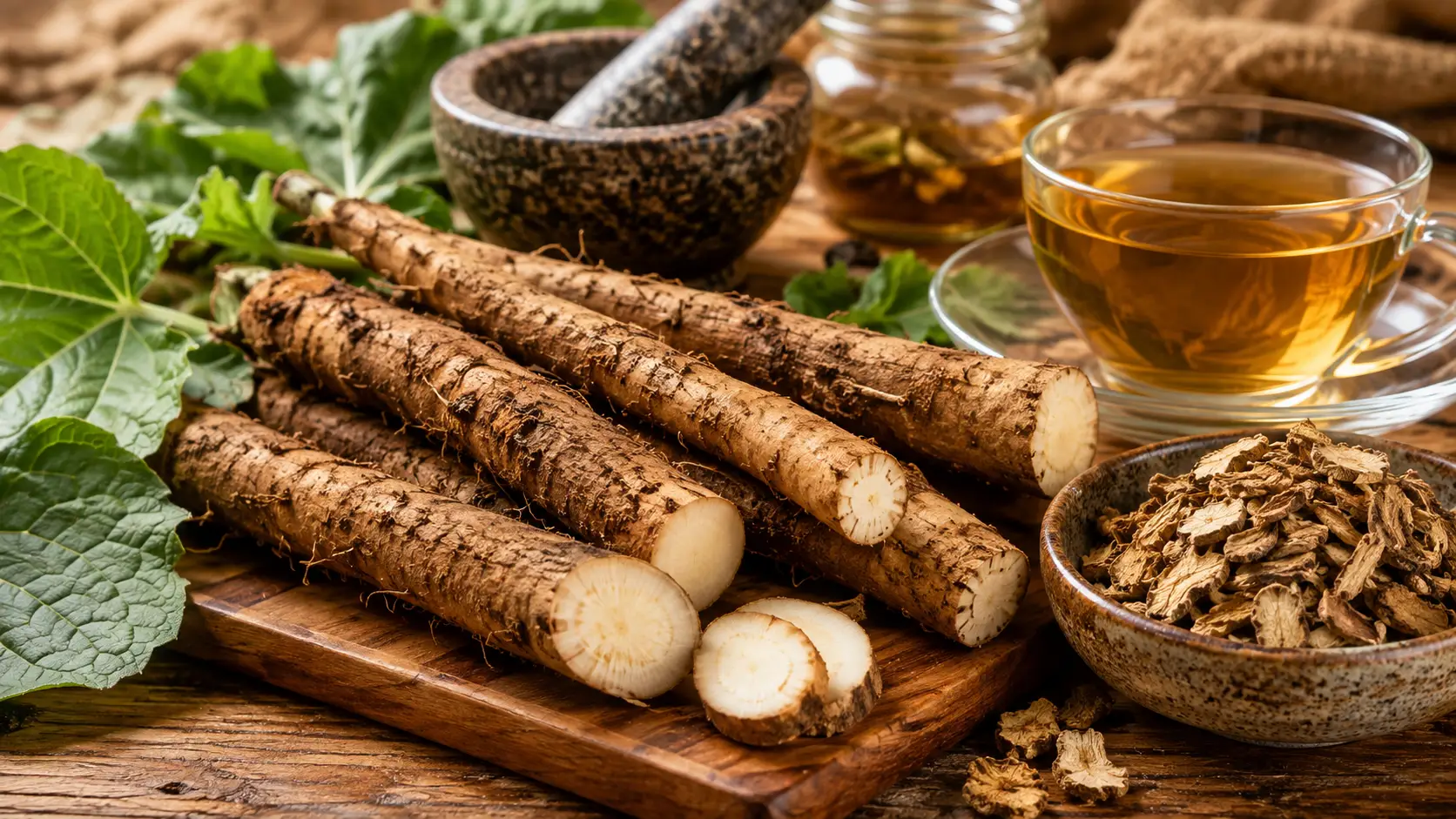
Burdock Root: Benefits, Uses & Possible Side Effects
Burdock root has moved well beyond its traditional role in Asian cooking and herbal medicine, with teas, powders, extracts, capsules, and skincare products now widely marketed around the world. Also known as Arctium lappa or gobo, this earthy root contains fiber and numerous naturally occurring plant compounds that have attracted scientific interest. Traditional systems have used burdock for digestion, skin complaints, urinary support, and general wellness, although modern evidence does not support every historical claim. Researchers are especially interested in its inulin-type fiber, phenolic acids, lignans, and antioxidant compounds. At the same time, much of the research remains laboratory or animal based rather than being confirmed through large human clinical trials. Understanding that distinction can help people use burdock root more realistically and safely.
The growing popularity of burdock supplements has also created considerable confusion about what the root can actually do. Online descriptions sometimes present it as a detoxifying herb, blood cleanser, cancer treatment, liver remedy, or powerful anti-inflammatory supplement, but these descriptions often go beyond available human evidence. Burdock is better viewed as an edible plant with promising biological properties rather than a proven treatment for numerous medical conditions. Its nutritional qualities may make it a useful addition to a balanced diet, while concentrated extracts require more caution. People taking medications, managing chronic conditions, or considering high-dose herbal products should discuss them with an appropriate healthcare professional. This guide explains burdock root benefits, common uses, possible side effects, research limitations, and practical safety considerations.
What Is Burdock Root?
Burdock root comes primarily from Arctium lappa, a plant belonging to the Asteraceae family, which also includes daisies, chrysanthemums, sunflowers, and ragweed. The plant grows across parts of Europe and Asia and has also become established in North America and other temperate regions. Burdock is recognizable by its large leaves and round burrs that readily attach themselves to clothing and animal fur. Beneath the ground, however, it develops a long edible taproot that can be harvested and prepared as food. Fresh burdock root has a firm texture with an earthy, mildly sweet flavor that becomes softer after cooking. In Japan, where it is commonly called gobo, the root appears in stir-fries, soups, simmered dishes, and other traditional foods.
The root has a long history in traditional herbal practices, including traditional Chinese medicine and European folk medicine. Historical uses have included supporting digestion, promoting urination, addressing certain skin complaints, and using the plant as a general herbal tonic. Different cultures have also used burdock leaves, seeds, and fruits, although these plant parts do not necessarily contain the same compounds as the root. This distinction matters because research involving burdock seeds or isolated arctigenin should not automatically be interpreted as evidence for eating burdock root. Herbal preparations can also differ considerably in concentration and extraction method. Modern scientific research therefore attempts to separate traditional experience from effects that can be consistently demonstrated under controlled conditions.
Burdock root is both a food and a source of phytochemicals, giving it a somewhat different profile from herbs consumed only in concentrated supplements. Fresh root provides dietary fiber along with small amounts of several vitamins, minerals, and carbohydrates. Researchers have paid particular attention to its inulin-type fructans, which are carbohydrates that function as fermentable dietary fiber. Burdock also contains phenolic compounds such as chlorogenic acids as well as lignans and other plant metabolites. These substances have demonstrated various biological activities in experimental research, including antioxidant and inflammation-related effects. However, the amounts obtained from eating normal portions of cooked burdock may differ substantially from doses used in concentrated extracts or laboratory experiments.
The term “burdock root” can therefore describe several very different products that should not be treated as equivalent. Someone eating sliced gobo in a vegetable dish receives food-level quantities of nutrients and plant compounds alongside dietary fiber. Burdock root tea extracts some water-soluble components but may contain less fiber than consuming the whole vegetable. Powders retain more of the plant material, while tinctures and standardized extracts can concentrate particular compounds. Capsules may contain powdered root, extracts, or mixtures of burdock with other herbs. Because concentration and formulation affect exposure, a safety profile established for a normal food serving cannot automatically be applied to a highly concentrated herbal supplement.
Burdock should also not be confused with unrelated plants simply because their roots look similar or because they appear in herbal products with overlapping claims. Accurate botanical identification is particularly important for wild-harvested plants because misidentification can potentially expose people to harmful species. Commercial products should clearly identify Arctium lappa or another intended burdock species on the ingredient label. Consumers should also examine whether the product contains only burdock or combines it with additional herbs that introduce their own benefits, risks, and interactions. This is particularly relevant to “detox” teas, where several ingredients may be combined in a single formula. Knowing the exact plant, part, preparation, and amount is the foundation for evaluating any burdock root product responsibly.
Nutrients and Active Compounds in Burdock Root
One of the most nutritionally interesting components of burdock root is its fermentable fiber, particularly inulin-type fructans. Inulin is not completely digested by human enzymes in the small intestine, so it travels into the colon where intestinal bacteria can ferment it. This characteristic is why inulin is commonly described as a prebiotic fiber rather than simply an ordinary carbohydrate. Prebiotics provide substrates that certain beneficial gut microorganisms can use, potentially influencing the composition and activity of the intestinal microbiome. Burdock has therefore attracted interest as a functional food ingredient as well as a traditional vegetable. Reviews of its composition identify the root as a source of inulin-type fructans alongside several other potentially bioactive compounds.
The root also contains phenolic compounds that contribute to its antioxidant activity in laboratory testing. Chlorogenic acids are among the better-known examples and are also naturally present in foods such as coffee, apples, potatoes, and various vegetables. Antioxidants interact with reactive molecules involved in oxidative processes, which has led researchers to investigate their potential relevance to long-term health. However, describing a food as antioxidant-rich does not mean it can prevent or cure diseases caused by oxidative stress. Human biology maintains complex antioxidant defense systems, and laboratory measurements do not directly predict clinical outcomes. Eating a diverse range of vegetables, fruits, legumes, nuts, and other plant foods remains more meaningful than relying on one herbal ingredient as an antioxidant solution.
Burdock species also contain lignans, including compounds known as arctiin and arctigenin that have generated significant pharmacological research. Much of the attention surrounding these compounds comes from experimental studies examining inflammatory pathways, cell signaling, microbial activity, metabolism, and abnormal cell growth. Arctigenin in particular has shown numerous biological effects in cell and animal models, encouraging researchers to study its possible therapeutic applications. Yet isolated molecules tested at controlled laboratory concentrations are different from consuming burdock tea or cooked root. The body must absorb, metabolize, distribute, and eliminate plant chemicals before they can produce clinically meaningful effects. Consequently, promising activity in a laboratory dish cannot establish burdock root as a treatment for cancer, infections, diabetes, or inflammatory diseases.
Other constituents found across Arctium lappa include flavonoids, polysaccharides, phenolic acids, fatty acids, and various secondary plant metabolites. The amount and balance of these compounds may change depending on growing conditions, plant maturity, processing, storage, and extraction techniques. Even different parts of the same burdock plant can contain noticeably different chemical profiles. Seeds may contain relatively high levels of particular lignans, while roots are notable for fructans and several phenolic compounds. This chemical variability is one reason herbal research can produce inconsistent findings across products and experiments. A study evaluating a carefully characterized extract should not automatically be used to promote every tea, powder, tincture, or capsule sold under the general name “burdock.”
From a dietary perspective, whole burdock root offers a simpler benefit that often receives less attention than its medicinal reputation. Like many root vegetables, it can add variety, texture, fiber, and plant-based nutrients to everyday meals. Fiber-rich foods can support bowel regularity, contribute to fullness, and provide substrates for intestinal microorganisms when incorporated into a balanced eating pattern. The root can be sliced thinly, boiled, roasted, braised, or added to soups and stir-fries rather than being consumed solely as a supplement. Food preparation also makes it easier to control portions compared with concentrated extracts. For people who tolerate it well, enjoying burdock as a vegetable may be a more straightforward way to explore it than immediately turning to high-dose herbal products.
Potential Benefits of Burdock Root
Digestive health is one of the most reasonable areas of interest because burdock root naturally contains fermentable inulin-type fiber. Prebiotic fibers can support gut bacteria that ferment carbohydrates and produce metabolites such as short-chain fatty acids, which play important roles within the colon. Increasing fermentable fiber may also help some people maintain bowel regularity when adequate fluid and overall dietary fiber are present. However, individual responses vary considerably, particularly in people who experience irritable bowel syndrome, bloating, or sensitivity to fermentable carbohydrates. Large amounts of inulin can cause gas, abdominal discomfort, or loose stools in susceptible individuals. Burdock should therefore be introduced gradually when digestive tolerance is uncertain rather than consumed in large supplemental doses immediately.
Burdock is also widely promoted for its potential antioxidant and anti-inflammatory properties. Experimental studies involving Arctium lappa extracts and individual plant compounds have shown activity in pathways related to oxidative stress and inflammation. These findings have generated research into possible applications involving metabolic health, inflammatory conditions, and tissue protection. Nevertheless, most of these mechanisms have been observed in laboratory experiments or animal models rather than being conclusively demonstrated in large clinical trials. A recent review examining burdock in immune-mediated skin diseases similarly found promising experimental activity but limited clinical validation and insufficient standardized dosing information. Burdock can therefore be described as scientifically interesting, but calling it a proven anti-inflammatory treatment would currently overstate the evidence.
Blood sugar control is another frequently discussed potential burdock root benefit, partly because the plant has traditionally been used in some cultures for metabolic concerns. Experimental research has reported glucose-related effects from burdock extracts and specific compounds, while limited human research has also explored metabolic outcomes. Memorial Sloan Kettering notes a small study in people with diabetic nephropathy in which burdock was associated with changes in post-meal glucose, lipid metabolism, and proteinuria. However, a small study is not enough to establish burdock as an effective diabetes treatment or determine an appropriate therapeutic dose. People with diabetes should not replace prescribed medication, nutrition therapy, or glucose monitoring with burdock supplements. Concentrated preparations may also complicate blood glucose management if they meaningfully affect glucose levels.
Skin health is another traditional use that continues to receive attention, especially for conditions involving irritation or inflammation. Burdock has historically been applied or consumed for eczema, acne, and other skin concerns, and laboratory findings provide possible mechanisms involving inflammatory signaling. However, clinical evidence supporting oral burdock root as a reliable treatment for eczema, psoriasis, acne, or other chronic skin diseases remains inadequate. A 2025 critical review examining Arctium lappa and immune-mediated skin conditions concluded that most available evidence comes from cell and animal research and that robust controlled clinical studies are still lacking. Anyone with persistent rashes, severe itching, infected skin, or unexplained lesions should obtain an accurate diagnosis before trying herbal remedies.
Burdock is sometimes advertised for liver cleansing, blood purification, detoxification, immunity, and even cancer prevention, but these claims deserve the greatest caution. The body already uses the liver, kidneys, lungs, gastrointestinal tract, and other biological systems to process and eliminate metabolic waste. Laboratory experiments have explored liver-protective, antimicrobial, and anticancer activities of burdock compounds, yet those results do not demonstrate that drinking burdock tea detoxifies the blood or treats cancer in humans. Memorial Sloan Kettering specifically notes that evidence is lacking for using burdock to treat cancer and several other heavily marketed conditions. People receiving medical treatment should be especially cautious about replacing effective therapy with unproven herbal products. Burdock’s potential should be discussed within the limits of available evidence rather than through sweeping detox claims.
Common Uses and Ways to Take Burdock Root
Using fresh burdock as food is one of the oldest and most practical ways to consume the root. Gobo is common in Japanese cooking and can be peeled or scrubbed, sliced into thin strips, and simmered, sautéed, or added to soups and vegetable dishes. Its naturally firm texture softens with cooking while retaining a characteristic earthy flavor. Combining burdock with carrots, mushrooms, sesame, rice, or other vegetables can make it part of an ordinary balanced meal rather than a medicinal product. Whole-root consumption also provides dietary fiber that may be reduced or absent in filtered teas and some extracts. People trying burdock for the first time may find culinary portions easier to tolerate than concentrated supplements.
Burdock root tea is another popular preparation and is usually made from dried pieces of the root steeped or simmered in hot water. The resulting beverage has a mild earthy taste and is sometimes sold alone or blended with herbs such as dandelion, ginger, or licorice. Tea may provide some soluble plant compounds, but it should not be expected to reproduce the full nutritional profile of eating whole burdock. It also cannot be assumed to contain the same concentrations tested in pharmacological studies using specially prepared extracts. Consumers should pay attention to multi-herb tea labels because any side effect may originate from another ingredient rather than burdock itself. Herbal teas marketed for detoxification deserve particular scrutiny when they contain numerous botanicals with laxative, diuretic, or medication-interacting properties.
Burdock capsules and powders are convenient for people who want a standardized routine, but they also introduce greater questions about concentration and product quality. A powdered-root capsule may contain relatively intact plant material, whereas an extract may concentrate particular chemical constituents through water, alcohol, or another extraction process. As a result, two products containing the same listed number of milligrams may not deliver comparable exposures to biologically active compounds. There is no universally established therapeutic dose of burdock root that has been proven effective for most of the conditions promoted online. More supplement is therefore not automatically more beneficial. Following product directions conservatively and avoiding unnecessary high-dose combinations can reduce the likelihood of unexpected effects.
Liquid tinctures and concentrated extracts are also available, particularly through herbal medicine retailers. These products may provide greater quantities of certain plant compounds in a relatively small serving, depending on the extraction ratio and solvent used. Concentrated preparations deserve additional caution because most consumers cannot easily compare the pharmacological strength of different products. Alcohol-based tinctures may also be inappropriate for people who need to avoid alcohol entirely, even though individual doses may contain relatively small amounts. Anyone combining tinctures with prescription medications should consider potential interactions rather than assuming that an herbal extract behaves like ordinary food. The absence of an immediate noticeable effect is not a reason to repeatedly increase the dose beyond labeled recommendations.
Burdock also appears in topical products such as creams, oils, shampoos, scalp treatments, and cosmetic formulations. These products are often marketed for dry skin, acne, hair growth, scalp health, or signs of aging, although evidence varies considerably by application. A small cosmetic study has generated interest in topical burdock extract for the appearance of wrinkled skin, but far more research would be needed before broad anti-aging claims could be established. Evidence specifically supporting burdock root as a hair-growth treatment is also limited despite its popularity in traditional hair-care products. Topical exposure can cause allergic contact dermatitis in susceptible individuals, particularly those sensitive to related plants. New cosmetic products should therefore be tested cautiously rather than applied extensively to irritated or damaged skin immediately.
What Current Research Says About Burdock Root
Scientific interest in Arctium lappa has grown because the plant contains an unusually diverse collection of phytochemicals. Reviews describe antioxidant, anti-inflammatory, antimicrobial, metabolic, gastroprotective, and other activities observed across laboratory and animal models. Researchers have also examined individual compounds such as arctiin and arctigenin because their molecular effects may eventually contribute to drug discovery. This breadth of biological activity sounds impressive, but it creates an important interpretation problem for consumers. A plant can influence numerous pathways in experimental settings without producing a meaningful therapeutic benefit when eaten or taken as a supplement. The key scientific question is not whether burdock compounds do something in cells, but whether standardized preparations safely improve health outcomes in humans.
A 2024 review focused specifically on the pharmacological properties and potential therapeutic applications of burdock root. The authors summarized research suggesting antioxidant, metabolic, liver-related, and other biological effects from burdock root extracts and their phytoconstituents. Much of the evidence discussed, however, came from preclinical models rather than large randomized human trials capable of confirming effectiveness. This distinction is central to understanding why burdock can appear highly promising in scientific reviews while still lacking strong clinical recommendations for most diseases. Preclinical research helps identify possible mechanisms and determine which questions deserve further investigation. It should be viewed as an early stage of evidence rather than proof that commercially available burdock supplements produce the same outcomes in people.
Recent research has continued to investigate burdock polysaccharides, including their structural characteristics and potential biological activities. A 2025 review discussed experimental findings involving antioxidant, inflammation-related, glucose-related, and gastrointestinal effects associated with polysaccharides extracted from Arctium lappa. Such research may eventually improve understanding of how burdock-derived compounds could be incorporated into functional foods or other applications. At present, however, identifying biological activity does not provide consumers with a clinically established dose or treatment recommendation. Extraction techniques can also produce substances that differ substantially from compounds obtained through ordinary cooking or tea preparation. Translating laboratory discoveries into safe human therapies typically requires pharmacokinetic research, toxicity testing, dose-finding studies, and well-controlled clinical trials.
Skin-related research provides another useful example of how evidence should be interpreted. A 2025 critical review investigated Arctium lappa, arctiin, and arctigenin in inflammatory and immune-mediated skin conditions, including atopic dermatitis and psoriasis. Experimental findings indicated effects on pathways such as NF-κB, JAK/STAT, and inflammasome-related signaling, which provides biological reasons for continued research. Yet the authors emphasized that most evidence came from laboratory and animal studies, preparations varied considerably, and robust human clinical validation was lacking. This is substantially different from demonstrating that drinking burdock tea can treat eczema or that burdock capsules can replace dermatological medication. Promising mechanisms should lead to more research rather than immediately becoming therapeutic promises.
The overall research picture therefore supports cautious curiosity rather than either extreme enthusiasm or dismissal. Burdock is clearly more than an inert folk remedy because researchers have identified multiple compounds capable of interacting with biological systems. At the same time, there is insufficient high-quality human evidence to recommend burdock root as a stand-alone treatment for diabetes, cancer, liver disease, chronic inflammatory disorders, serious infections, or most skin diseases. The strongest everyday rationale for consuming burdock remains its role as an edible, fiber-containing plant food rather than an alternative medication. Future clinical studies may clarify which extracts, compounds, doses, and health conditions provide meaningful benefits. Until then, consumers should distinguish emerging scientific potential from established medical effectiveness.
Possible Side Effects and Safety Risks
Burdock root eaten in normal food quantities is generally tolerated by many people, but digestive symptoms can occur, particularly when intake rises quickly. Its inulin-type fiber is fermented by intestinal bacteria, which can produce gas as part of the normal fermentation process. Some people may therefore experience bloating, abdominal pressure, cramping, or changes in bowel movements after consuming larger servings. Individuals with irritable bowel syndrome or sensitivity to fermentable carbohydrates may be more likely to notice these effects. Starting with modest food portions provides a practical way to evaluate tolerance. Persistent abdominal pain, severe diarrhea, vomiting, or other significant symptoms should not simply be attributed to normal fiber adjustment and deserve appropriate medical attention.
Allergic reactions are another important concern because burdock belongs to the Asteraceae botanical family. People who react to chrysanthemums, daisies, ragweed, or related plants may potentially experience cross-sensitivity, although individual reactions vary. Reported reactions to burdock include allergic contact dermatitis after skin exposure, while rare serious systemic reactions have also been documented. Memorial Sloan Kettering describes a case of anaphylaxis occurring after consumption of boiled burdock, illustrating that natural foods and herbs can occasionally provoke severe allergies. Symptoms such as difficulty breathing, throat swelling, widespread hives, faintness, or rapidly progressing facial swelling require emergency medical treatment. Anyone with significant botanical allergies should be especially cautious before experimenting with concentrated burdock products.
Pregnancy is another circumstance in which medicinal burdock supplementation should generally be approached cautiously. Reliable human safety data are limited, and traditional references have raised concerns about possible uterine-stimulating effects. Memorial Sloan Kettering advises against burdock during pregnancy because of this potential concern. This warning does not mean that accidental exposure to a small food quantity will necessarily cause harm, but it does mean concentrated medicinal use lacks adequate reassurance. Breastfeeding safety information is also limited, particularly for extracts, tinctures, and high-dose supplements. Pregnant or breastfeeding individuals should therefore discuss herbal products with a qualified healthcare professional rather than assuming a traditional plant is automatically safe during these physiologically sensitive periods.
Another consideration involves the liver and the difficulty of identifying which ingredient caused a problem in multi-herb products. A case of acute liver injury has been reported after consumption of a herbal “liver detox” tea that included burdock among its ingredients, although such a combination cannot establish that burdock alone caused the reaction. This illustrates why adverse events involving herbal mixtures are often difficult to interpret. Supplements can contain multiple active plants, contaminants, undeclared ingredients, or concentrations that differ from traditional preparations. People who develop jaundice, dark urine, severe fatigue, persistent nausea, or right-upper abdominal discomfort while taking a new supplement should seek medical care. Continuing a product because it is marketed as liver-supportive could potentially worsen an unrecognized adverse reaction.
Product quality itself represents another potential risk, especially when purchasing supplements from unknown sellers. Herbal products can vary in botanical identity, purity, concentration, contamination testing, and manufacturing standards. Wild harvesting creates additional concerns because burdock can potentially be confused with other plants when identification is poor. Consumers should favor manufacturers that clearly list the botanical name, plant part, amount, additional ingredients, and quality-testing information rather than products making dramatic cure claims. Independent testing can provide extra reassurance about ingredient identity and contaminants, although it does not prove that a supplement is medically effective. Safe herbal use depends not only on the properties of Arctium lappa but also on knowing what is actually inside the product being consumed.
Who Should Be Careful With Burdock Root?
People taking medication for diabetes should use particular caution with concentrated burdock supplements because experimental and limited clinical findings have raised the possibility of glucose-lowering effects. If burdock meaningfully lowers blood sugar in an individual, combining it with insulin or glucose-lowering medication could theoretically increase the risk of hypoglycemia. Symptoms can include sweating, shakiness, confusion, rapid heartbeat, weakness, and in severe situations loss of consciousness. Evidence is not strong enough to predict how commonly this interaction occurs or what dose might cause it. That uncertainty is itself a reason to avoid unsupervised high-dose use. People with diabetes should maintain their prescribed treatment plan and discuss supplements with the clinician responsible for their glucose management.
Burdock has traditionally been described as having diuretic properties, meaning it may increase urine output, although strong human evidence supporting this effect is lacking. People taking prescription diuretics should nevertheless be cautious about combining them with herbal products marketed specifically to increase urination. Excessive fluid or electrolyte loss can be problematic, particularly in individuals with kidney disease, heart conditions, low blood pressure, or medications that already alter fluid balance. Drinking more water does not automatically eliminate these risks because electrolyte regulation is more complex than simple hydration. A product advertised as a natural “water pill” should not be considered equivalent to ordinary vegetable consumption. Medical conditions involving fluid management deserve clinician-guided treatment rather than experimentation with concentrated herbal preparations.
Individuals with known allergies to plants in the daisy or Asteraceae family may also need to avoid burdock or introduce it only with professional guidance. The possibility of cross-reactivity means someone who has experienced severe reactions to chrysanthemums, ragweed, or related botanicals should not assume burdock is unrelated simply because it is eaten as a root. Topical exposure can matter as well because burdock-containing creams, oils, or shampoos may trigger localized skin reactions. Redness, itching, swelling, blistering, or worsening dermatitis after application should prompt discontinuation. Severe systemic allergy symptoms require emergency attention rather than home treatment with additional herbs. Reading botanical ingredient names can help people recognize burdock even when a product primarily uses its Latin name, Arctium lappa.
People preparing for surgery should make sure their surgical team knows about all herbal supplements they use, including burdock. Surgery can involve medications, blood pressure changes, fluid management, glucose control, anesthesia, and postoperative drug regimens, creating several reasons to review unnecessary supplements beforehand. Even when a specific burdock interaction has not been conclusively demonstrated, clinicians may recommend discontinuing nonessential herbal products for a period before an elective procedure. Patients should follow the timing advised by their medical team rather than choosing an arbitrary stopping period themselves. This is particularly important for concentrated extracts or multi-ingredient formulations whose complete pharmacological effects may be uncertain. Ordinary culinary foods are a different exposure and should be discussed separately when relevant.
Children, older adults with multiple medical conditions, and people with liver or kidney disease should also be conservative with high-dose herbal supplements unless appropriate professional guidance is available. These groups may process medications and plant compounds differently or may be more vulnerable to dehydration, metabolic changes, or adverse reactions. A lack of documented interactions should not automatically be interpreted as proof that no interaction exists, because many herbal preparations have not been studied extensively enough to identify every risk. Anyone taking several prescription medications should consider having a pharmacist or clinician review their supplement list. Eating burdock occasionally as part of a normal diet is very different from taking concentrated extracts every day. Dose, preparation, medical history, and treatment goals all influence whether burdock use is sensible.
How to Use Burdock Root Safely
The safest way for many healthy adults to explore burdock is through ordinary food rather than immediately purchasing a concentrated supplement. Fresh gobo can be washed thoroughly, sliced, cooked, and included alongside other vegetables as part of a varied diet. Starting with a moderate portion can help identify whether its fermentable fiber causes uncomfortable bloating or digestive changes. People who already eat relatively little fiber may benefit from increasing fiber-rich foods gradually rather than making a sudden large change. Adequate fluid intake also supports normal digestive function as fiber intake rises. Using burdock as food has the additional advantage of emphasizing dietary variety instead of expecting a single botanical ingredient to solve multiple health concerns.
Anyone interested in burdock tea should choose products that clearly identify the ingredients and avoid blends making unrealistic promises about detoxification, cancer treatment, rapid weight loss, or disease reversal. Preparing tea according to package directions is preferable to producing highly concentrated homemade brews without any understanding of dose. Consumers should remember that filtering the root removes much of its intact dietary fiber, so burdock tea is not nutritionally equivalent to eating the vegetable. Multiple cups every day may also provide substantially greater exposure than occasional traditional use. If unusual symptoms appear after starting the tea, stopping it temporarily can help determine whether the new product may be involved. Severe symptoms should be medically evaluated rather than managed through trial and error.
Supplement users should inspect labels for the botanical name, root quantity, extract concentration, additional herbs, serving instructions, and credible quality-control information. Choosing a product solely because the front label says “organic,” “detox,” or “clinically inspired” provides little information about effectiveness. Third-party quality testing can help verify that a supplement contains expected ingredients and does not exceed certain contaminant limits, although certification does not guarantee health benefits. It is also useful to avoid starting several new supplements simultaneously. Introducing one product at a time makes potential side effects or allergic reactions easier to identify. Consumers should keep clinicians informed about concentrated herbal products, especially when prescription medications or chronic health conditions are involved.
It is equally important to define why burdock is being used and how success will be measured. Someone eating it for dietary variety requires no medical outcome beyond enjoying a nutritious vegetable and tolerating it comfortably. A person taking a supplement specifically for eczema, diabetes, liver disease, or chronic inflammation, however, is making a therapeutic decision that deserves a higher standard of evidence. Symptoms and laboratory values should not be ignored simply because an herbal product is being tried. If a condition is worsening or conventional treatment is being delayed, the risks can outweigh any theoretical burdock benefit. Complementary products are most responsibly used when they support rather than replace appropriate diagnosis, monitoring, and evidence-based medical care.
Burdock root ultimately offers an interesting combination of traditional use, nutritional value, and emerging scientific research. Its inulin-type fiber and diverse phytochemicals make it worthy of continued study, particularly within nutrition, functional foods, metabolism, and plant-based pharmacology. However, current research does not justify describing burdock as a cure-all, blood purifier, cancer remedy, or guaranteed treatment for inflammatory and metabolic diseases. Many promising findings still come from cell experiments and animal studies rather than large controlled trials in humans. For most people, moderate culinary use is easier to justify than aggressive supplementation based on uncertain health claims. Choosing reputable products, monitoring tolerance, checking medication interactions, and maintaining realistic expectations can make burdock use safer and more evidence-informed.
Frequently Asked Questions About Burdock Root
What is burdock root mainly used for?
Burdock root is eaten as a vegetable, brewed as herbal tea, and used in supplements and traditional herbal practices. People commonly use it for digestive support, skin wellness, and general nutrition, although strong clinical evidence for treating specific diseases remains limited.
Can you take burdock root every day?
Burdock eaten regularly in normal food quantities may be suitable for many healthy adults who tolerate it well. Daily concentrated supplementation is different, and long-term safety, medication interactions, dosage, and individual medical conditions should be considered before routine use.
Does burdock root detox the body?
There is not strong clinical evidence showing that burdock root specifically removes toxins from the blood or performs a medically defined detoxification process. The liver, kidneys, gastrointestinal system, lungs, and other organs already perform the body’s primary waste-processing and elimination functions.
Is burdock root good for the skin?
Burdock contains compounds with antioxidant and inflammation-related activity, and it has a long history of traditional use for skin complaints. However, current clinical evidence is insufficient to establish burdock as a proven treatment for acne, eczema, psoriasis, or other significant skin conditions.
Who should avoid burdock root supplements?
Pregnant individuals, people with serious allergies to related Asteraceae plants, and anyone taking medications that may interact with concentrated herbal products should seek professional guidance before using burdock supplements. People with chronic medical conditions, those preparing for surgery, and individuals taking multiple prescriptions should also discuss regular medicinal use with a qualified healthcare professional.