

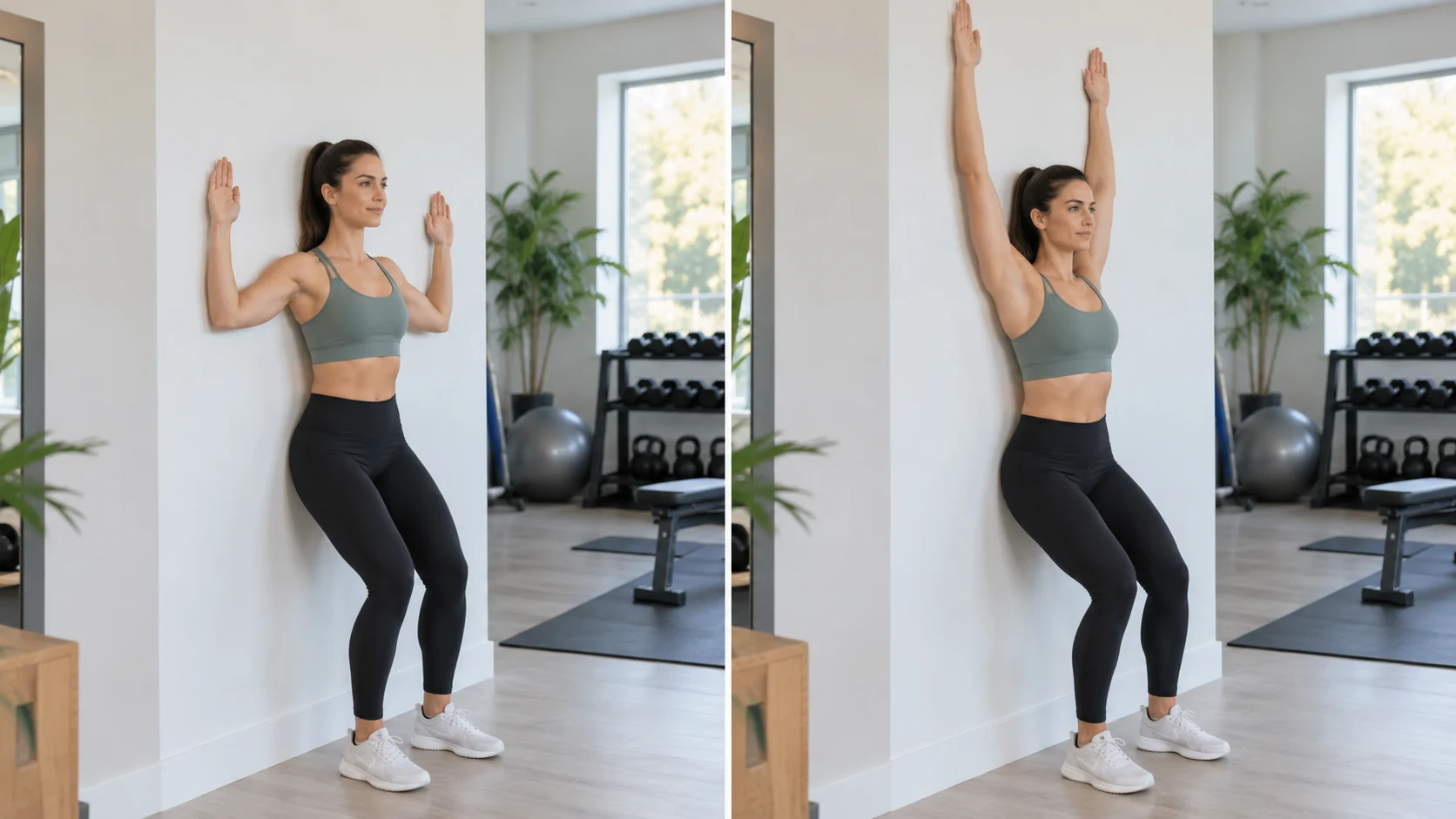
Wall angels are a simple mobility and posture-focused exercise that can help improve shoulder movement, upper-back control, and awareness of how you position your arms and spine. The movement is performed with your back against a wall while slowly sliding your arms upward and downward, similar to making a snow angel.
Although wall angels look easy, many people quickly notice tightness through the chest, shoulders, or upper back when they try them. The exercise requires controlled movement rather than simply forcing your arms against the wall. Done correctly, wall angels can be useful for people who spend long hours sitting, working at a computer, or training their upper body.
Wall angels are not a magical fix for every posture problem, but they can be a valuable part of a broader mobility and strength routine. Learning proper form, understanding which muscles are involved, and using appropriate modifications can help you perform the exercise more comfortably and effectively.
What Are Wall Angels?
Wall angels are a bodyweight mobility exercise performed while standing with your back against a wall. Your arms begin in a bent position, usually around shoulder height, and then slowly slide upward before returning downward. The goal is to maintain controlled contact with the wall while moving through a comfortable range.
The exercise challenges mobility through the shoulders and upper back while encouraging awareness of rib, head, and arm position. It can also activate muscles around the shoulder blades that help support healthy upper-body movement. Because the exercise requires little space and no equipment, it is easy to include in home or office routines.
Wall angels are often used during warm-ups, posture routines, rehabilitation programs, and mobility sessions. However, the purpose is not to force every part of your body flat against the wall. The movement should remain comfortable, controlled, and appropriate for your individual shoulder range.
Muscles Worked During Wall Angels
Wall angels involve several muscles around the shoulders and upper back. The lower and middle trapezius help control the shoulder blades, while the rotator cuff muscles support shoulder stability. The serratus anterior can also contribute to smooth shoulder-blade movement as your arms travel overhead.
The muscles along the upper back help maintain position while your arms move. Meanwhile, the chest and front shoulder muscles may feel stretched if they are tight. This combination of gentle activation and mobility work is one reason wall angels are commonly included in routines for people who feel stiff after prolonged sitting.
Your core also plays a supporting role. Light abdominal control helps prevent excessive arching through the lower back while your arms move upward. The goal is not to brace as hard as possible, but to keep your ribs and pelvis relatively controlled so the movement comes mainly from the shoulders and upper back.
Benefits of Wall Angels
One of the main benefits of wall angels is improved shoulder mobility. The exercise encourages the arms to move overhead while the shoulder blades rotate in a controlled way. Practicing this pattern may help people become more comfortable with reaching movements used during exercise, daily activities, and sports.
Wall angels can also improve postural awareness. Many people who work at desks become accustomed to rounded shoulders and a forward head position. The wall provides immediate feedback, helping you notice how your head, ribs, shoulders, and arms are positioned without needing mirrors or complicated equipment.
Another benefit is better upper-back muscle engagement. Wall angels encourage controlled activation of muscles that help support the shoulder blades. These muscles are important during pulling, pressing, reaching, and overhead activities, so improving awareness and control can complement a balanced upper-body strength program.
How to Do Wall Angels Correctly
Stand with your back against a wall and place your feet slightly forward if needed for comfort. Keep your head, upper back, and hips gently supported without aggressively pressing everything flat. Bend your elbows to roughly 90 degrees and position your upper arms around shoulder height.
Slowly slide your arms upward as far as you can without pain or excessive lower-back arching. Keep the movement smooth and avoid shrugging your shoulders toward your ears. If your wrists or elbows lose contact with the wall, continue only within the range where you can maintain good control.
Pause briefly at your highest comfortable position, then slowly slide your arms back down. Keep breathing normally throughout the exercise and avoid forcing your arms into the wall. One controlled repetition is more useful than several rushed repetitions performed with compensations or discomfort.
Common Wall Angel Mistakes
One common mistake is arching the lower back to create the appearance of greater shoulder mobility. When the ribs flare forward and the lower back moves away from the wall, the shoulders are not actually doing more work. Reduce your range and keep the torso relatively stable instead of chasing a higher arm position.
Another mistake is forcing the wrists and elbows against the wall. Not everyone has enough shoulder mobility to maintain full contact immediately, and pushing aggressively can create discomfort. Let your arms move only through a range that feels controlled while gradually working on mobility over time.
Shrugging the shoulders is also common. As the arms move upward, some people pull their shoulders toward their ears rather than allowing the shoulder blades to rotate naturally. Focus on keeping your neck relaxed and avoid turning the exercise into a tense movement that creates more tightness than it relieves.
Wall Angels for Posture and Desk Workers
People who sit for long periods often experience stiffness through the chest, shoulders, neck, and upper back. Wall angels can provide a simple movement break that encourages the arms and shoulder blades to move through a different pattern. Even a few controlled repetitions can help interrupt long periods of static sitting.
However, good posture is not about holding one perfect position all day. Staying still for hours can become uncomfortable regardless of how well you sit. Regularly changing positions, standing, walking, stretching, and moving your shoulders may be more useful than trying to maintain rigid posture from morning until evening.
Wall angels work best when combined with broader habits. Adjust your workstation, keep frequently used items within easy reach, and take short movement breaks. The exercise can support postural awareness, but it should be part of a routine that includes regular movement and overall upper-body strength.
Wall Angels and Shoulder Mobility
Shoulder mobility depends on more than the shoulder joint alone. The upper back, shoulder blades, ribs, and surrounding muscles all influence how comfortably your arms can move overhead. Wall angels encourage these areas to coordinate rather than focusing only on stretching one muscle.
If overhead movement feels restricted, do not force your arms higher during wall angels. Work within your available range and focus on smooth control. Mobility often improves gradually when exercises are performed consistently and without aggressive stretching that creates irritation.
You can also combine wall angels with shoulder circles, gentle chest stretches, and upper-back mobility exercises. Strength movements can complement this work as well; exercises such as pike pushups can help develop shoulder strength once you have enough mobility and control for more demanding pressing movements.
How Many Wall Angels Should You Do?
Beginners can start with one or two sets of five to eight controlled repetitions. Move slowly enough to notice where your shoulders become restricted and where your lower back wants to compensate. Quality matters more than completing a large number of repetitions.
If the exercise feels comfortable, you may gradually increase to two or three sets of eight to twelve repetitions. There is usually no need to perform dozens of wall angels in one session. The exercise is generally most useful when each repetition is deliberate and performed through a comfortable range.
Wall angels can be included several times per week or used as a light daily mobility exercise if they do not create soreness or irritation. People who already perform a large amount of upper-body training may use them during warm-ups or recovery sessions rather than treating them as a demanding workout.
Wall Angel Variations and Modifications
If standard wall angels are too difficult, try performing them while lying on the floor. The floor provides similar feedback while reducing the balance demands of standing. Bend your knees, keep your lower back comfortable, and move your arms only as far as your shoulders allow.
Another option is to perform wall slides instead of full wall angels. Start with your forearms against the wall and slide them upward while maintaining gentle pressure. This variation can be easier for people who cannot comfortably position the backs of their hands or elbows against the wall.
More advanced variations can include resistance bands or slow tempo repetitions. Adding resistance should only come after you can control the basic movement well. The purpose of progression is to improve strength and control, not to make the exercise unnecessarily difficult or turn it into a painful mobility challenge.
Best Practices for Wall Angels
Warm up briefly before performing wall angels if your shoulders feel especially stiff. Gentle arm circles, shoulder rolls, or a few minutes of general movement can make the exercise feel more comfortable. Avoid using aggressive stretching as your warm-up because the goal is controlled movement rather than forcing maximum range immediately.
Focus on breathing naturally throughout each repetition. Exhale gently as your arms move and avoid holding your breath while trying to maintain contact with the wall. Relaxing your jaw and neck can also help prevent unnecessary tension from building during the movement.
Progress should be gradual. Over time, you may notice that your arms move higher with less compensation, but improvements can vary from person to person. Consistency, strength training, mobility work, and everyday movement habits generally matter more than trying to achieve a perfect wall angel in a single session.
Who Should Be Careful With Wall Angels?
Wall angels should not create sharp shoulder, neck, or back pain. If the exercise causes pinching, numbness, tingling, or worsening discomfort, stop and reduce the range or choose another movement. Pain is not a sign that the exercise is working more effectively.
People recovering from shoulder surgery, significant injury, or recent upper-body trauma may need professional guidance before adding wall angels. The movement can be useful in some rehabilitation programs, but the correct range and timing depend on the individual condition and stage of recovery.
Anyone with persistent shoulder pain or major limitations in overhead movement should avoid assuming that tight muscles are the only cause. Joint irritation, injury, nerve involvement, and other factors can create similar symptoms. A qualified healthcare professional can help determine why movement is restricted and which exercises are appropriate.
How to Add Wall Angels to Your Routine
Wall angels fit well into a warm-up before upper-body training. You can perform a small number of controlled repetitions before pushups, rows, overhead presses, or other shoulder exercises. This gives you an opportunity to practice upper-back and shoulder movement before using heavier resistance.
They can also be used during desk breaks. Stand up, walk for a minute, then perform several wall angels before returning to work. This simple routine can break up prolonged sitting and encourage movement through areas that may feel stiff after typing or using a computer for several hours.
Another option is to include wall angels in a mobility circuit alongside chest stretches, thoracic rotations, shoulder circles, and light pulling exercises. Keep the routine short enough that you can perform it consistently. A simple routine repeated regularly is often more useful than a complicated plan you rarely complete.
Conclusion
Wall angels are a simple exercise that can help improve shoulder mobility, upper-back control, and postural awareness. They require no equipment and can be performed at home, in the gym, or during work breaks. The wall provides useful feedback that helps you notice compensations and movement restrictions.
Good form matters more than forcing your arms into a perfect position. Keep your ribs controlled, avoid excessive lower-back arching, and move only through a comfortable range. If your wrists or elbows cannot remain against the wall, reduce the range rather than pressing aggressively.
Use wall angels as part of a broader routine that includes strength training, regular movement, mobility work, and good recovery habits. With consistent practice, they can become a useful tool for improving shoulder control and making overhead movement feel smoother and more comfortable.
FAQs
What are wall angels good for?
Wall angels can help improve shoulder mobility, upper-back control, and postural awareness. They also encourage better coordination between the shoulder blades, arms, and upper spine during overhead movement.
How many wall angels should I do?
Start with one or two sets of five to eight controlled repetitions. As the movement becomes easier, you can gradually increase the repetitions while continuing to prioritize smooth form and a comfortable range.
Should my entire back touch the wall during wall angels?
No. You should not force your lower back completely flat against the wall. Maintain a comfortable spine position and avoid excessive arching while keeping your head, upper back, and hips reasonably controlled.
Can wall angels fix rounded shoulders?
Wall angels may improve mobility and postural awareness, but they are unlikely to fix rounded shoulders by themselves. Strength training, movement habits, workstation setup, and overall mobility also play important roles.
Can I do wall angels every day?
Many people can perform wall angels daily if the exercise remains comfortable and does not cause irritation. Keep the volume moderate and stop if you experience sharp pain, numbness, or worsening shoulder discomfort.