

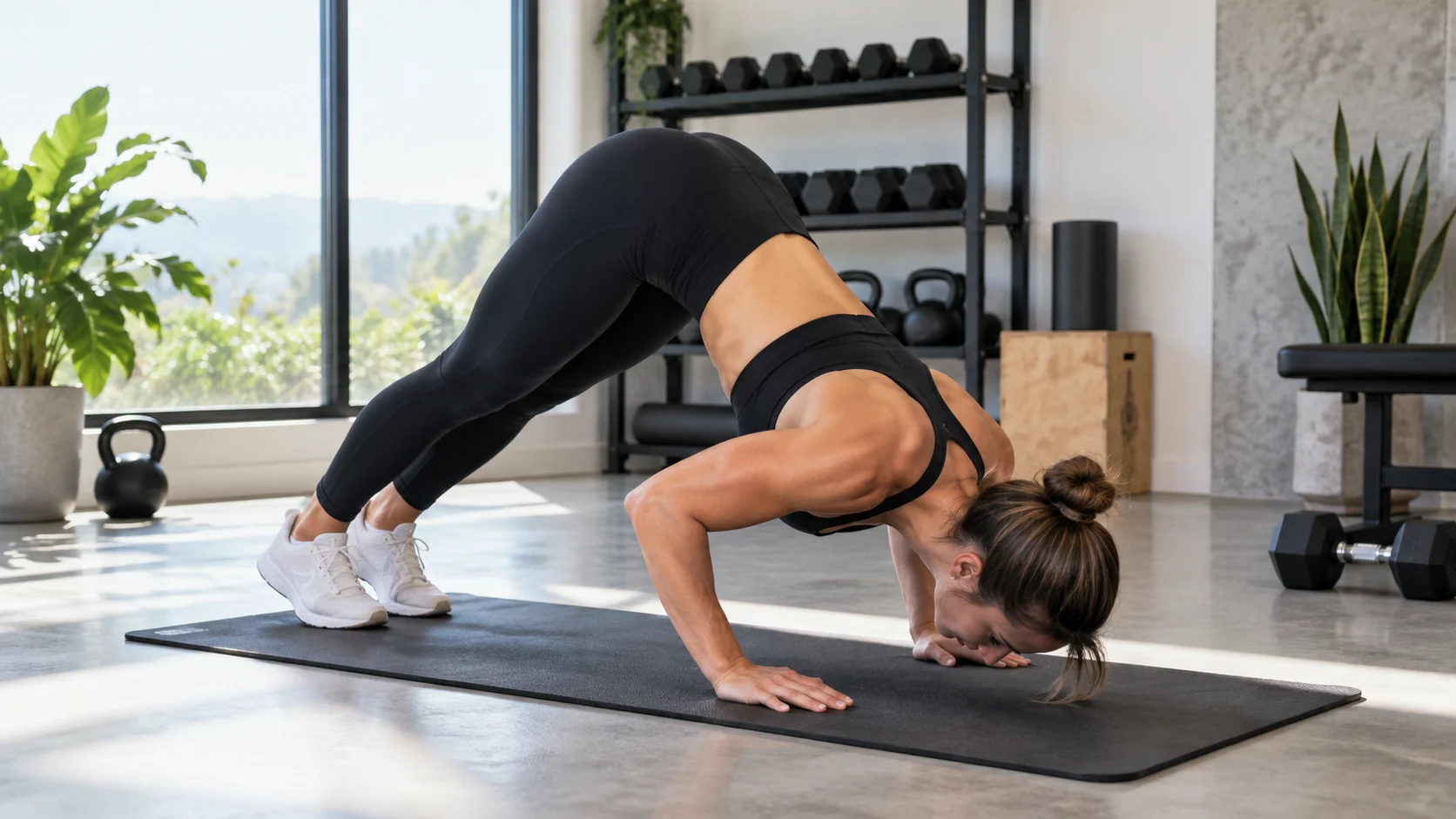
Pike pushups are a bodyweight exercise that primarily targets the shoulders while also challenging the triceps, upper chest, core, and upper back. The movement places your body in an inverted V position, creating a pressing angle that feels closer to an overhead press than a standard pushup. This makes pike pushups useful for building upper-body strength without weights.
They are commonly used by people training at home, practicing calisthenics, or preparing for more advanced movements such as handstand pushups. Because the exercise shifts more body weight toward the upper body, it can be considerably more demanding than a normal pushup. Proper technique is important to keep the movement controlled and reduce unnecessary stress on the shoulders or neck.
The good news is that pike pushups can be modified for different fitness levels. Beginners can reduce the angle, while stronger exercisers can elevate their feet to increase difficulty. Learning the correct form, understanding the muscles involved, and progressing gradually can help you get more benefit from this effective shoulder-strengthening exercise.
What Are Pike Pushups?
Pike pushups are a bodyweight pressing exercise performed with the hips lifted high while the hands and feet remain on the floor. Your body forms an inverted V shape, which shifts more of your weight toward your arms and shoulders. You then lower your head toward the floor by bending your elbows before pressing yourself back to the starting position.
Unlike traditional pushups, which mainly emphasize the chest, pike pushups create a more vertical pressing pattern. This increased vertical angle places greater demand on the deltoids, especially the front portions of the shoulders. The triceps and upper chest also contribute while the core and upper back help stabilize your body throughout the movement.
Pike pushups are often used as a progression toward handstand pushups because they introduce the basic mechanics of overhead bodyweight pressing. You can practice shoulder strength, upper-body control, and inverted positioning without supporting your full body weight vertically. This makes the exercise useful for both general strength training and more advanced calisthenics goals.
Muscles Worked During Pike Pushups
The shoulders are the primary muscles working during pike pushups. The anterior deltoids help press your body away from the floor as your elbows extend. Because your hips remain elevated, the movement places more resistance on the shoulders than a regular pushup, making it a practical bodyweight alternative to exercises such as overhead presses.
Your triceps also play an important role. These muscles straighten the elbows as you push back toward the starting position. The upper chest contributes to the pressing movement as well, especially when your body angle is less vertical. Together, the shoulders, triceps, and upper chest create the majority of the force needed to complete each repetition.
Several stabilizing muscles work throughout the exercise too. Your core helps keep the torso controlled, while the upper back and shoulder-blade muscles support proper positioning. The hamstrings and calves may also feel stretched because of the pike position, although flexibility should never be forced simply to achieve a more dramatic inverted V shape.
How to Do Pike Pushups With Proper Form
Start in a high plank position with your hands slightly wider than shoulder-width apart. Walk your feet toward your hands while lifting your hips upward until your body forms an inverted V. Keep your spine long, brace your abdomen lightly, and allow your heels to stay lifted if tight hamstrings prevent them from reaching the floor comfortably.
From this position, bend your elbows and lower the top or front of your head toward the floor between your hands. Think about sending your head slightly forward rather than dropping directly between your wrists. Keep the movement controlled and avoid allowing your elbows to flare excessively outward as you descend.
Once your head approaches the floor, press firmly through your hands and straighten your elbows to return to the starting position. Keep your hips elevated throughout the repetition rather than allowing your body to flatten into a regular pushup. Move slowly enough to maintain control, especially during the lowering phase where poor technique often becomes more noticeable.
Benefits of Pike Pushups
One major benefit of pike pushups is improved shoulder strength. Because the body position shifts resistance toward the upper body, your shoulders must work harder than they do during standard pushups. Regular practice can help build pressing strength that may carry over to overhead movements and more advanced bodyweight exercises.
Pike pushups are also highly convenient because they require no gym equipment. You can perform them at home, while traveling, or anywhere you have enough floor space. This accessibility makes them useful for people who want to strengthen their shoulders and triceps without relying on dumbbells, barbells, or weight machines.
Another benefit is progression toward handstand-based training. Pike pushups teach you to tolerate more body weight through the hands and shoulders while maintaining an inverted position. They also help develop coordination and confidence before attempting harder variations. However, handstand pushups still require additional balance, strength, mobility, and control beyond what pike pushups alone can provide.
Pike Pushups vs Regular Pushups
Regular pushups mainly target the chest, triceps, and front shoulders while keeping the body relatively horizontal. Pike pushups shift the hips upward and create a steeper pressing angle. This changes the emphasis toward the shoulders and makes the movement resemble an overhead press more closely than a traditional horizontal pushup.
The two exercises therefore serve different purposes rather than competing with each other. Standard pushups are excellent for general chest and upper-body pressing strength, while pike pushups place more stress on the deltoids. Including both can provide more balanced upper-body training if you want to develop strength across different pressing angles.
Pike pushups may feel harder even if you can perform many regular pushups comfortably. The shoulders are working against a larger proportion of your body weight, especially as your hips move higher. If standard pike pushups are too difficult, reduce the angle first instead of forcing poorly controlled repetitions that shift stress into your neck or lower back.
Common Pike Pushup Mistakes to Avoid
One common mistake is allowing the hips to drop too low. When this happens, the movement begins to resemble a normal pushup and the shoulders receive less of the intended training stimulus. Keep your hips elevated and think about maintaining an inverted V throughout each repetition rather than letting your body flatten as fatigue develops.
Another mistake is lowering the face straight toward the floor without allowing the head to travel slightly forward. This can create an awkward pressing path and make the movement feel cramped. Aim to bring your head toward a point slightly ahead of your hands while keeping your neck neutral instead of excessively tucking or extending it.
Moving too quickly is another problem. Bouncing through repetitions may reduce control and make it harder to maintain proper shoulder and elbow alignment. Slow the lowering phase, pause briefly if needed, and press back up smoothly. Controlled repetitions usually provide a stronger training stimulus than simply trying to complete the largest possible number quickly.
How Many Pike Pushups Should You Do?
The right number of pike pushups depends on your current strength and training goal. Beginners may start with two or three sets of five to eight controlled repetitions. If your form begins to break down before reaching that range, stop the set earlier rather than continuing with poor technique just to reach a target number.
Intermediate exercisers may perform three or four sets of eight to fifteen repetitions depending on the variation. Once standard pike pushups become easy, increasing difficulty is often more effective than performing extremely high repetitions. Elevating your feet, increasing range of motion, or slowing the lowering phase can provide a stronger challenge.
You do not need to train pike pushups every day. Two or three sessions per week may be enough for many people when combined with other upper-body exercises. Allow your shoulders and triceps adequate recovery, particularly if your routine also includes overhead presses, handstand training, dips, or other demanding pressing movements.
Pike Pushup Variations and Progressions
Beginners can make pike pushups easier by placing their hands on an elevated surface such as a sturdy bench or box. This reduces the percentage of body weight supported by the upper body. It allows you to practice the movement pattern while gradually building enough shoulder strength for the floor version.
Once standard pike pushups feel comfortable, try elevating your feet on a stable platform. This makes your torso more vertical and places a greater proportion of your body weight over your hands. The exercise becomes significantly more demanding on the shoulders and begins to resemble the mechanics required for handstand pushups.
More advanced exercisers can increase range of motion by placing the hands on stable blocks or parallettes and lowering the head below hand level. This variation requires strong shoulders and good control, so progression should be gradual. Do not increase elevation, range of motion, and repetitions simultaneously if your technique is not already consistent.
Best Tips for Better Pike Pushups
Focus on shoulder movement rather than simply trying to touch your head to the floor. Your goal is controlled pressing strength, not achieving the deepest possible position at any cost. Keep your hands firmly planted, spread your fingers for stability, and maintain even pressure through both sides throughout the repetition.
Breathing can also improve control. Inhale as you lower yourself toward the floor and exhale as you press back up. Avoid holding your breath unnecessarily during moderate sets, especially if doing so causes excess tension through your neck, jaw, or upper body.
Recovery matters just as much as training effort. Shoulder muscles need time to recover after demanding pressing sessions, and good sleep supports overall exercise recovery. Building habits around mobility, training, and restful routines such as yoga for sleep can complement a balanced fitness plan without making recovery unnecessarily complicated.
How to Add Pike Pushups to Your Workout
Pike pushups can fit into an upper-body, push-day, shoulder, or full-body workout. Perform them early in the session if improving shoulder strength is a major goal because you will be less fatigued. If they are only an accessory exercise, you can place them after your primary presses or pushup variations.
A simple bodyweight workout might combine pike pushups with regular pushups, rows, squats, and core exercises. This gives you a mix of horizontal pressing, vertical-style pressing, pulling, lower-body work, and trunk stability. Choose exercise volumes that match your fitness level instead of trying to maximize every movement in the same session.
Track your progress over time. You might record how many clean repetitions you can perform, which variation you use, or how high your feet are elevated. Gradual progression helps prevent random training and makes it easier to see whether your shoulder strength is actually improving from week to week.
Who Should Be Careful With Pike Pushups?
Pike pushups place substantial load through the wrists, elbows, and shoulders. Anyone with current pain or a recent upper-body injury should avoid forcing the movement. Sharp pain, instability, numbness, or worsening discomfort are signs to stop and seek appropriate professional guidance rather than continuing through the symptoms.
People with limited shoulder mobility may also find the exercise uncomfortable. Reducing the body angle or using an elevated surface can make the movement more manageable while you work on strength and mobility. You do not need to copy an advanced version simply because someone else can perform it comfortably.
Beginners should also avoid progressing directly to feet-elevated pike pushups before mastering the basic version. Strengthening gradually gives the shoulders and wrists time to adapt. If you are unsure whether pike pushups are appropriate because of an existing condition or previous injury, a qualified healthcare or fitness professional can help assess your situation.
Conclusion
Pike pushups are an effective bodyweight exercise for building shoulder, triceps, and upper-body pressing strength. Their inverted V position shifts more resistance toward the shoulders than a standard pushup, making them useful for home workouts, calisthenics programs, and progression toward harder movements such as handstand pushups.
Proper form should always come before repetitions. Keep your hips elevated, lower your head slightly forward between your hands, and control both the downward and upward phases. If the exercise feels too difficult, reduce the angle or use an elevated surface instead of sacrificing technique.
Progress gradually as your strength improves. Standard pike pushups can eventually lead to feet-elevated variations, greater range of motion, and advanced handstand-focused training. Combined with sensible recovery and balanced upper-body programming, pike pushups can become a valuable part of a long-term strength routine.
FAQs
Are pike pushups good for shoulders?
Yes. Pike pushups place significant emphasis on the front deltoids while also training the triceps and upper chest. They can be an effective bodyweight exercise for developing shoulder pressing strength.
Are pike pushups harder than regular pushups?
For many people, yes. The pike position shifts more body weight toward the shoulders, creating a more vertical pressing angle that usually feels more demanding than a standard pushup.
How many pike pushups should a beginner do?
Beginners can start with two or three sets of around five to eight controlled repetitions. If proper form breaks down earlier, stop the set and use an easier variation if necessary.
Do pike pushups help with handstand pushups?
Yes. Pike pushups develop shoulder pressing strength and introduce inverted body positioning, making them a useful progression. However, handstand pushups also require additional balance, control, mobility, and strength.
Can I do pike pushups every day?
Daily training is usually unnecessary. Two or three sessions per week may provide enough practice and strength stimulus for many people while allowing the shoulders and triceps time to recover.