

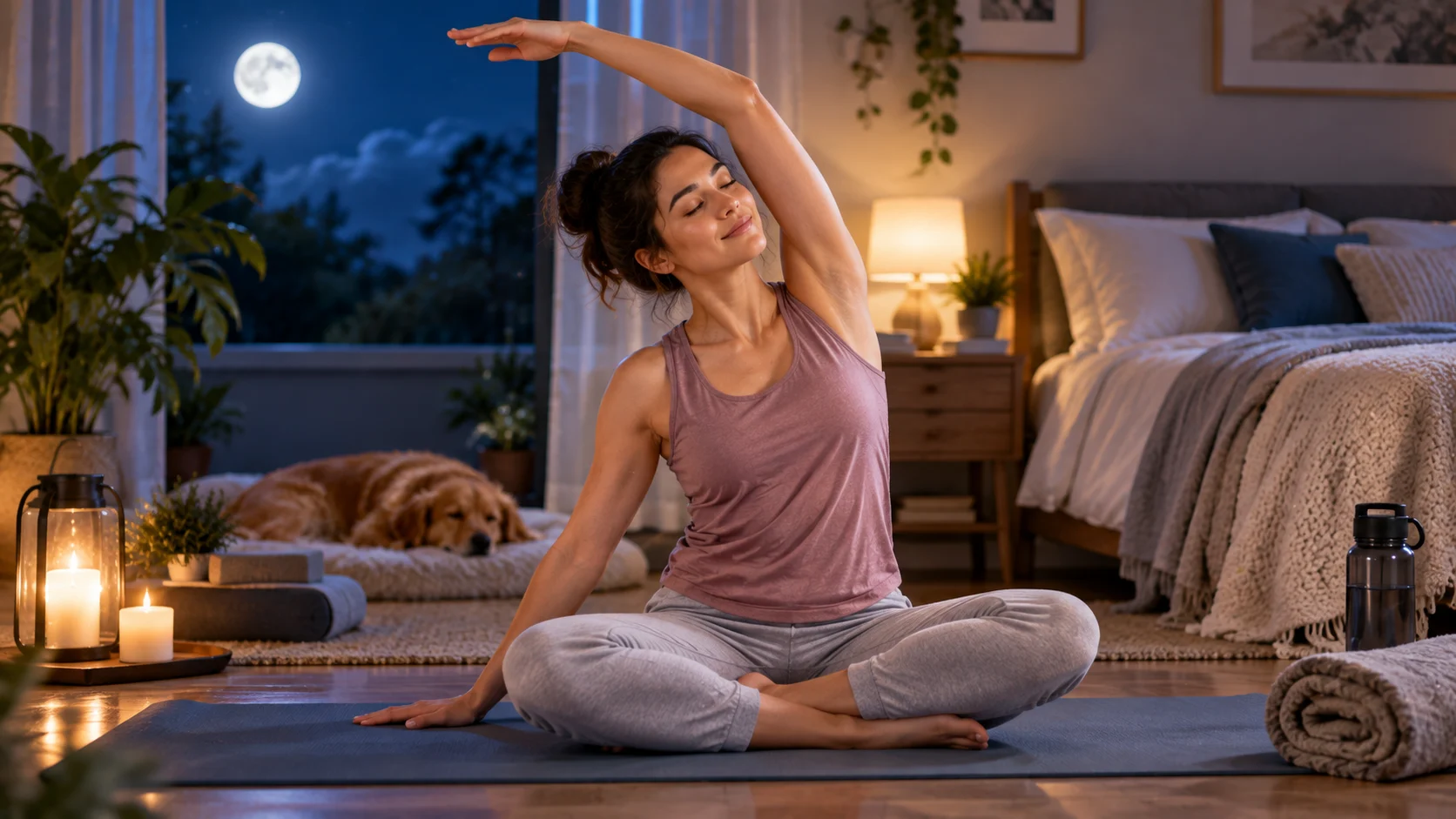
What Is Yoga for Sleep?
Yoga for sleep is a gentle form of movement and breathing designed to help the body slow down before bedtime. Instead of focusing on intense flexibility, strength, or challenging poses, bedtime yoga emphasizes relaxation, comfortable stretches, and controlled breathing. The goal is to create a calmer transition from daytime activity into a more restful evening routine.
A sleep-focused yoga session may include slow forward folds, supported stretches, gentle twists, breathing exercises, and quiet relaxation. These movements are usually performed at a comfortable pace without forcing the body into deep positions. Some people practice for five or ten minutes, while others prefer a longer routine depending on their schedule and experience.
Yoga should not be viewed as a guaranteed treatment for insomnia or other sleep disorders. However, it may help some people feel physically relaxed and mentally settled before bed. When combined with regular sleep habits, a comfortable environment, and reduced late-night stimulation, gentle yoga can become a useful part of an evening wind-down routine.
How Yoga May Support Better Sleep
Yoga may support sleep by encouraging a gradual shift from activity toward relaxation. Slow movements and steady breathing can make it easier to notice physical tension and release unnecessary effort around the shoulders, jaw, back, and hips. This calmer physical state can help some people feel more prepared to rest once they get into bed.
A regular bedtime routine can also provide a behavioral signal that the day is ending. Repeating the same quiet activities each evening may help create a predictable transition toward sleep. Yoga can fit naturally into that routine because it reduces screen exposure while giving you something simple and structured to focus on before bed.
Mental relaxation is another potential benefit. Instead of continuing to think about work, messages, responsibilities, or tomorrow’s schedule, yoga brings attention back to breathing and body position. It does not necessarily eliminate racing thoughts, but it may give your mind a slower and less stimulating activity during the final part of the evening.
Best Types of Yoga for Sleep
Gentle yoga styles are generally better suited to bedtime than fast, physically demanding sessions. Restorative yoga uses supported positions that allow the body to relax with minimal muscular effort. Props such as cushions, blankets, or pillows may make poses more comfortable, especially when you plan to remain still for several minutes.
Yin-inspired stretches can also be used carefully before bed because they are usually slower and quieter than active yoga styles. However, you do not need to push deeply into a stretch or hold uncomfortable positions for long periods. For sleep preparation, comfort and relaxation are more important than improving flexibility as quickly as possible.
Yoga nidra is another relaxation-focused practice that usually involves lying down while following guided body awareness or breathing instructions. It is different from a physical yoga sequence and may appeal to people who prefer minimal movement before sleep. Some individuals find this type of guided relaxation useful when they feel mentally busy but physically tired.
Easy Yoga Poses to Try Before Bed
Child’s pose is a simple option when it feels comfortable for your knees and hips. Kneel, sit back toward your heels, and reach your arms forward or rest them beside your body. Support your head on a pillow if needed, and focus on slow breathing rather than trying to stretch as far as possible.
A gentle seated forward fold can help relax the back of the body. Sit with your legs in a comfortable position, keep your spine relaxed, and hinge forward only as far as feels easy. You can bend your knees and place a cushion under them rather than forcing the legs completely straight.
A reclined twist is another calming option. Lie on your back, bend your knees, and slowly allow them to move toward one side while keeping the position comfortable. Keep the movement gentle and avoid forcing your knees toward the floor, especially if you have back, hip, or spinal problems that make twisting uncomfortable.
Legs-Up-the-Wall Pose for Evening Relaxation
Legs-up-the-wall is a popular relaxation pose that requires very little active effort. Sit beside a wall, carefully lie back, and bring your legs upward so they rest comfortably against the wall. You do not need to place your hips directly against the wall if that position feels too intense for your hamstrings or lower back.
Stay in the position only while it feels comfortable. Place a folded blanket under your hips or head if needed, and allow your arms to rest beside you. Slow breathing can make the pose feel more restful, but there is no need to control every breath or remain in the posture for a specific amount of time.
This pose is not appropriate for everyone. People with certain eye conditions, cardiovascular concerns, circulation problems, or medical restrictions involving inverted positions should ask a healthcare professional whether it is suitable. If you feel pressure, dizziness, numbness, or discomfort, come out of the pose slowly rather than trying to continue.
Use Breathing Exercises With Bedtime Yoga
Breathing is one of the simplest ways to make a bedtime yoga routine feel more calming. Try allowing your breath to become slower without forcing unusually deep inhalations. A comfortable pattern might involve breathing gently through your nose while making the exhalation slightly longer than the inhalation.
For example, you might inhale comfortably for four counts and exhale for five or six counts. The exact numbers do not matter if counting makes you tense or distracted. The aim is to create smooth, unhurried breathing that feels easy rather than turning relaxation into another performance goal.
Stop any breathing technique that makes you lightheaded, short of breath, or uncomfortable. People with respiratory, cardiovascular, or anxiety-related concerns may prefer normal relaxed breathing instead of structured breath holds. Bedtime breathing should reduce effort, not make you feel that you have to control your body perfectly before you can sleep.
Practice Proper Form Without Overstretching
Bedtime yoga should feel significantly gentler than a demanding workout. Move slowly into each position and stop when you notice a mild, comfortable stretch. Sharp pain, pinching, numbness, tingling, or joint pressure are signs that you should reduce the range of motion or leave the pose altogether.
Use pillows, cushions, folded blankets, or yoga blocks when they make a position easier to maintain. Props are not a sign that you are performing the pose incorrectly. In a sleep-focused routine, support can actually make the practice more effective because you are less likely to tense your muscles while trying to hold yourself in place.
Avoid comparing your flexibility with photos or videos online. Body structure, mobility, injuries, and experience vary greatly between individuals. The best form is the version that allows you to breathe comfortably and remain relaxed while keeping joints and muscles within a range that feels controlled and appropriate for your body.
When Is the Best Time to Do Yoga for Sleep?
Many people prefer practicing yoga about thirty to sixty minutes before bed because it gives them time to slow down without feeling rushed. However, there is no universal ideal time. Some people enjoy a short routine immediately before getting into bed, while others prefer yoga earlier in the evening after finishing work or dinner.
Avoid turning bedtime yoga into a highly stimulating workout. Fast flows, intense balance practice, challenging inversions, or demanding strength sequences may leave some people feeling more alert instead of relaxed. If you enjoy vigorous yoga, consider doing it earlier in the day and saving slower movements and breathing for the evening.
Consistency can matter more than exact timing. Practicing for ten minutes at roughly the same point in your evening routine may be easier to maintain than completing a long session occasionally. A predictable sequence can become part of your wind-down process alongside dimmed lights, reduced screen use, and other calming habits.
Build a Simple Bedtime Yoga Routine
Start with two or three minutes of quiet breathing while sitting or lying comfortably. Follow this with a few gentle movements such as shoulder rolls, easy neck movement, or a relaxed seated stretch. Keeping the beginning simple can help you shift attention away from the day without immediately asking your body to hold a long position.
Next, choose three or four comfortable poses. You might use child’s pose, a gentle forward fold, a reclined twist, and legs-up-the-wall if these positions suit you. Spend enough time in each pose to relax, but move on when you become uncomfortable instead of treating the routine as a test of endurance.
Finish by lying comfortably on your back or side for several minutes. Allow your breathing to return to a natural rhythm and notice whether your muscles feel less tense. Your entire routine can take ten to twenty minutes, and there is no need to make it longer unless you genuinely enjoy a more extended practice.
Combine Yoga With Better Sleep Habits
Yoga tends to work best as one part of a broader sleep routine rather than as the only habit you change. Try keeping your bedtime and wake time reasonably consistent whenever possible. A regular schedule can help your body develop a more predictable sleep-wake pattern over time.
Your sleep environment matters as well. A dark, quiet, and comfortably cool bedroom can make it easier to settle after finishing yoga. Reducing bright screens and stimulating activities near bedtime may also help because an intense work session or long period of scrolling can quickly undo the calm atmosphere you created during your practice.
Pay attention to caffeine, alcohol, late meals, and long daytime naps if sleep remains difficult. These factors can affect sleep differently from person to person. Tracking your routine for a week or two may help you identify patterns and determine whether yoga improves sleep more when it is combined with specific changes elsewhere in your evening.
Common Mistakes to Avoid With Sleep Yoga
One common mistake is choosing poses that require too much effort. If you are sweating, holding your breath, or struggling to maintain balance, the session may be too stimulating for bedtime. Sleep-focused yoga should usually feel slower and easier than the type of practice you might use for strength, flexibility, or athletic training.
Another mistake is forcing stretches because you believe deeper must be better. Aggressive stretching can irritate muscles and joints and make it harder to relax afterward. Use gentle ranges of motion, especially late in the evening when the goal is settling the nervous system rather than achieving new flexibility milestones.
Avoid worrying about whether yoga is “working” every night. Sleep naturally varies, and one difficult night does not mean the routine failed. Evaluate the practice over time by asking whether it helps you feel calmer, less physically tense, and more prepared for bed rather than expecting it to make you fall asleep instantly.
When to Be Careful With Bedtime Yoga
People with recent injuries, severe joint problems, balance difficulties, or significant back and neck conditions should modify poses carefully. A physical therapist, yoga professional with appropriate training, or healthcare provider can help identify movements that are more suitable. You should never push through pain because a pose is commonly recommended for relaxation.
Pregnancy may also require modifications, particularly for prolonged positions lying flat on the back or deeper twists. People with glaucoma, uncontrolled blood pressure concerns, or conditions affected by inversion should be cautious with certain poses. Individual medical advice is more useful than assuming every gentle-looking yoga position is appropriate for everyone.
If you experience persistent insomnia, loud snoring with choking or gasping, severe daytime sleepiness, or sleep problems that significantly affect daily functioning, yoga should not replace medical evaluation. These symptoms may point to a sleep disorder or another health issue that deserves assessment beyond relaxation techniques.
Conclusion
Yoga for sleep is a gentle way to create a calmer transition between daytime activity and bedtime. Slow movement, comfortable stretches, controlled breathing, and supported relaxation can help reduce physical tension and make your evening feel less stimulating. The routine does not need to be complicated or long to become useful.
Focus on comfort rather than flexibility. Choose simple poses, use cushions or blankets when needed, and avoid aggressive stretching or highly demanding sequences close to bedtime. A short routine performed consistently is often easier to maintain than an elaborate practice that feels like another task on your schedule.
Yoga may support better sleep, but it works best alongside healthy sleep habits such as a consistent schedule, a comfortable bedroom, and reduced late-night stimulation. If sleep problems are persistent or severe, speak with a healthcare professional rather than relying on yoga alone. The most effective bedtime routine is one that feels calming, safe, and sustainable.
Frequently Asked Questions
Is yoga good for sleep?
Yoga may help some people feel calmer and less physically tense before bed. Gentle movement and breathing can be useful as part of a consistent evening routine, although results vary from person to person.
How long should I do yoga before bed?
A bedtime yoga session can be as short as five to twenty minutes. Longer is not necessarily better, so choose a duration that feels relaxing and is easy to maintain consistently.
Which yoga pose is best for sleep?
There is no single best pose for everyone. Child’s pose, gentle reclined twists, supported forward folds, and legs-up-the-wall are common choices when they feel comfortable and suit your health needs.
Can I do yoga right before going to sleep?
Yes, gentle yoga can be practiced shortly before bed. Avoid vigorous flows or challenging poses if they make you feel more alert, warm, or physically stimulated instead of relaxed.
Can yoga cure insomnia?
Yoga is not a guaranteed cure for insomnia. It may support relaxation and better sleep habits, but persistent insomnia or significant daytime impairment should be discussed with a healthcare professional.